• Fearless Reporting on the Climate Crisis & Corporate Power

    Fearless Reporting on the Climate Crisis & Corporate Power

    Fearless Reporting on the Climate Crisis & Corporate Power From exposing pulp mill politics to investigating 'green' hydrogen projects, Joan's investigative work holds corporations and governments accountable while amplifying community voices fighting for climate and environmental justice.

  • From Africa to Atlantic Canada: Stories of People & Places

    From Africa to Atlantic Canada: Stories of People & Places

    From Africa to Atlantic Canada: Stories of People & Places With over 30 years of international experience, Joan brings unique perspectives from seven African countries to her reporting on environmental challenges, public transport, and community activism in Canada.

  • That Matter: Environmental Justice & Corporate Accountability

    That Matter: Environmental Justice & Corporate Accountability

    Discover Joan Baxter's award-winning books, including "The Mill: Fifty Years of Pulp and Protest" and "Seven Grains of Paradise," alongside her investigative journalism exposing environmental issues and corporate capture across Canada and Africa.

Large sign with dark blue background, and VIA in yellow letters, then a red maple leaf, and underneath the words "VIA Rail Canada" in white lettering. Behind the sign, a red brick building and a very blue sky. A white seagull sits atop the sign.

In this second article in a series about passenger train service in Canada – past, present and future – we look at just how dramatically passenger rail service has been diminished, the myriad problems VIA Rail faces, and at the efforts by some parliamentarians to support and protect the Crown corporation responsible for passenger rail service in the country. Part 1 is available here. This article was first published by the Halifax Examiner.

If Green Party leader Elizabeth May had her way, VIA Rail would have its very own legislation, something the Crown corporation has not had since its creation in 1977.

A VIA Rail Act, she says, would enable the Crown corporation to fulfil its mandate to provide modern safe, efficient, climate-friendly and reliable passenger rail service in Canada.

That’s why, in 2022, May tabled Bill C-326 – the VIA Rail Act – that she hoped would accomplish just that

Alas, as a private members’ bill, the VIA Rail Act didn’t go anywhere after first reading, and is still languishing on the table.

But May hasn’t given up hope for improved and expanded passenger rail in Canada, as she says in a phone interview from her home in British Columbia.

Read more

Concrete facade of an imposing building, looking a little worse for wear, with a Canadian flag flying to the left of the columns and entrance to the building, over which there is a blue sign with the yellow logo of VIA Rail and its red maple leaf.

This, the third and final article looking at passenger rail service in Canada, was originally published by the Halifax Examiner. It delves into the decision by the federal government to privatize the most lucrative VIA Rail route in Ontario and Quebec, and what this could mean for passenger rail service in the rest of the country. The first two articles are available here and here .

On March 9, 2022, Omar Alghabra, then Canada’s transport minister, announced that the federal government was about to privatize the country’s busiest passenger rail corridor between Windsor, Ontario, and Quebec City.

Of course that is not quite the way Transport Canada worded the surprise announcement in its press release full of doublespeak, under this deceptively benign headline: “Government of Canada launches the next phase in the procurement process of High Frequency Rail.”

The word “privatize” is nowhere to be found in the press release, even though it clearly states that the government of Canada was launching a “Request for Expressions of Interest” from “industry” on the High Frequency Rail (HFR) project, to allow the government to “seek feedback from experienced private sector companies to help shape” the HFR project.

Almost as an afterthought, towards the end of the press release, Transport Canada gets around to mentioning the Crown corporation, VIA Rail, and its employees, which it says “are central to the success of High Frequency Rail and will continue to play a key role across Canada as our national passenger rail provider.”

That March 2022 announcement made one thing very clear: the plans for the future of VIA Rail’s passenger rail service had changed.

Not just changed, but really changed.

Instead of simply moving ahead with the “High Frequency Rail project” in VIA Rail’s Windsor-Quebec City corridor, which would “offer a faster, more frequent, accessible and sustainable rail service,” the federal government was now planning to privatize that chunk of the VIA Rail passenger service.

The high frequency rail project – not to be confused with high speed rail (HSR) for which there are no plans in Canada – had been in the works since VIA Rail first proposed it in 2016. It would involve some new tracks exclusively for VIA Rail’s use and improved tracks elsewhere to allow passenger trains to move at good speeds without ceding way to CN freight trains. It would also include new trains for that corridor.

In addition, VIA Rail had been hoping for federal funding so it could replace its antiquated equipment on its long-distance routes – the Ocean train between Montreal and Halifax, and the Canadian between Toronto and Vancouver.

All of this – the HFR project and the new equipment for long-distance trains – would be managed by VIA Rail, greatly improving its passenger rail service and securing its future as a crucial public service.

At least that had been the plan before March 2022.

Read more

Sign at the entrance to the Pictou County pulp mill declaring Northern Pulp is a Paper Excellence company. Photo: Joan Baxter

Sign at the entrance to the Pictou County pulp mill declaring Northern Pulp a Paper Excellence company. Photo: Joan Baxter

This is how the “Friends of a New Northern Pulp” describe themselves on their website:

We are Nova Scotians who care deeply about our province, our forests, and our communities. We are the 36,000 Nova Scotians who own small and large woodlots.

So, just one line in and the BS begins.

The wording of the second sentence suggests that every one of the 36,000 small and large woodlot owners in the province is a “friend” of a “new Northern Pulp.”

If this statement were true, then I — as a woodlot owner — would count among the “friends” of the “new Northern Pulp.”

What is the “new Northern Pulp” anyway? If it’s the company they’re talking about, it looks an awful lot like the old Northern Pulp.

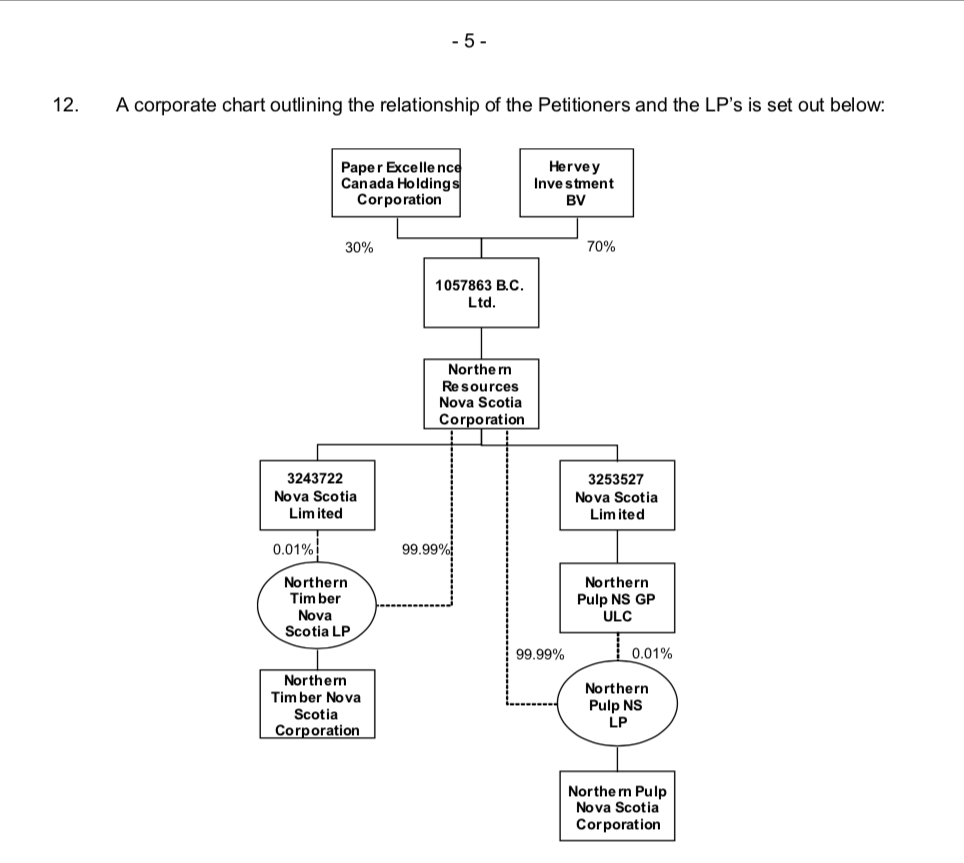
Northern Pulp’s recent submissions to the BC Supreme Court show it’s still the same old Paper Excellence company, one of whose declared “owners” is just an address in a popular tax haven (The Netherlands).

Corporate structure of Paper Excellence from Bruce Chapman 2020 affidavit to BC Supreme Court

Corporate structure of Paper Excellence from Bruce Chapman 2020 affidavit to BC Supreme Court

Read more

This article was originally published by the Halifax Examiner on November 28, 2021.

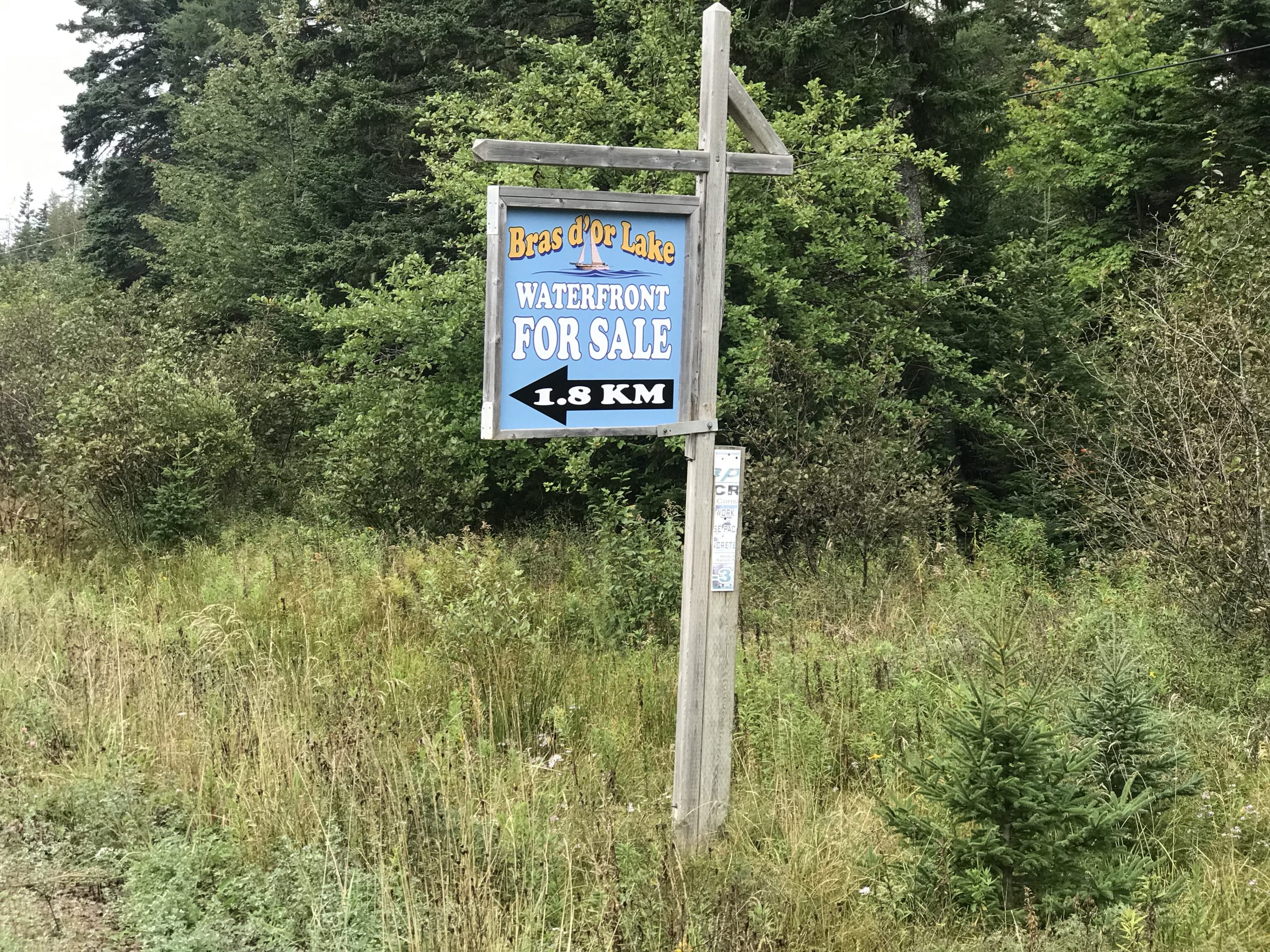
Sign on Highway 4 in Cape Breton advertising waterfront for sale on the Bras d'Or Lake. Photo by Joan Baxter

Photo: Joan Baxter

Nova Scotia has long been a popular place not just for settlers, but in the last century it also became a popular place for non-residents — including many well-heeled Americans and Europeans — to purchase properties.[1]

For decades, scholars and successive governments have debated the issue of non-resident land ownership in a province with relatively little Crown land, with waterfronts being carved up into private properties that reduce public access to Nova Scotia shorelines.

The COVID-19 pandemic has caused a real estate boom in Nova Scotia, including most rural counties, as people from urban centres, elsewhere in Canada and abroad, looked for ways to escape crowded urban areas.

A few months into the pandemic, the German magazine, Der Spiegel, broke the story that some right-wing conspiracy theorists were marketing Cape Breton to like-minded German-speaking Europeans, which added yet another dimension to long-standing questions about non-resident land ownership in Nova Scotia.

This three-part series follows up on its 2020 coverage and looks into some of these questions it raises, even as the province prepares to change the property tax rate for non-resident owners.

This, the final of three articles, looks at previous efforts to come to grips with the question of land ownership regulation in Nova Scotia, what it means for affordability of properties, and why it’s all been so contentious for so long.

Read part 1 here.

Read part 2 here.

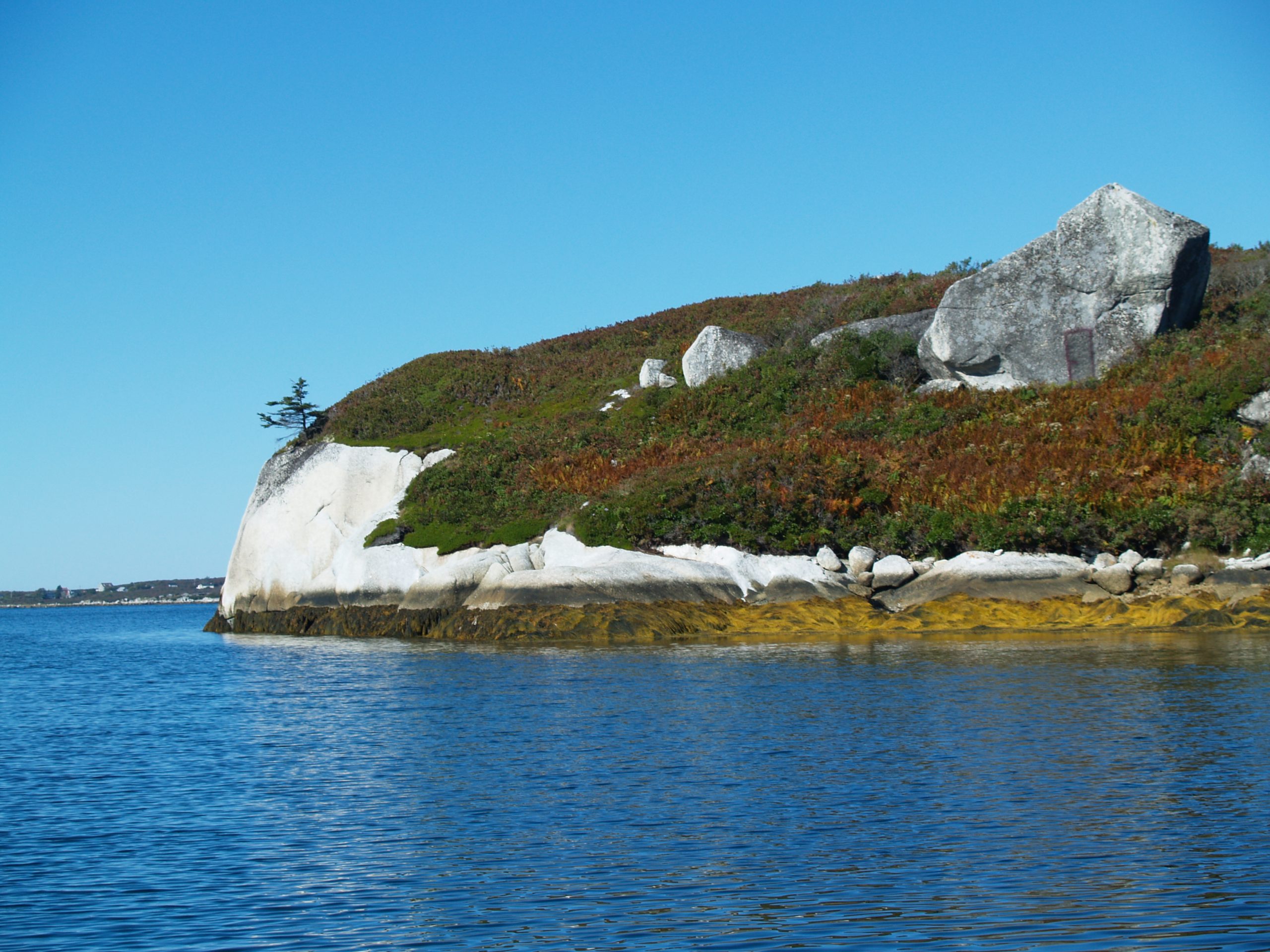
Stunning white rock shoreline near Terence Bay. Photo by Joan Baxter

Nova Scotia coastline near Terence Bay. Photo: Joan Baxter

It was a spring day, and as they’d been doing for some weeks, Jan and Paul (not their real names) were driving around looking for land on the South Shore of Nova Scotia, where Jan had spent a good part of her childhood.

Both were living and working in Halifax, and wanted a property they could call their own, where they would settle down and eventually retire. They had been scouting out properties for weeks, and had yet to find a place they could afford. For many years, the South Shore had been popular with American and European buyers who had no problem paying hefty prices for oceanfront properties.

“One day we were driving out near Terence Bay,” Jan recalled for the Halifax Examiner. “And we saw this sign that said ‘lots for sale’ on a dirt road that seemed to lead to the waterfront. So we just started driving. The gate was open.”

Suddenly another vehicle came out of nowhere and cut them off. The woman driver stopped her car, slammed the door, and approached their open window, angrily informing them they were on private property.

“We said we were sorry but that we had seen a sign that there were lots for sale, and we told her we were potential buyers,” Jan said.

The woman, who had a strong German accent, was still angry, and proclaimed loudly, “We don’t sell to Canadians.”

She said the lots were only for Europeans.

Jan and Paul turned around and headed back to the main road.

Jan, a fifth generation Nova Scotian, was in tears.

This happened back in the mid-1990s, but Jan remembers it as if it were yesterday, especially her visceral reaction to being told that Canadians were not welcome to buy land in … Nova Scotia.

A new tax levy for non-residents?

Non-resident land ownership in Nova Scotia has been a contentious issue for decades.

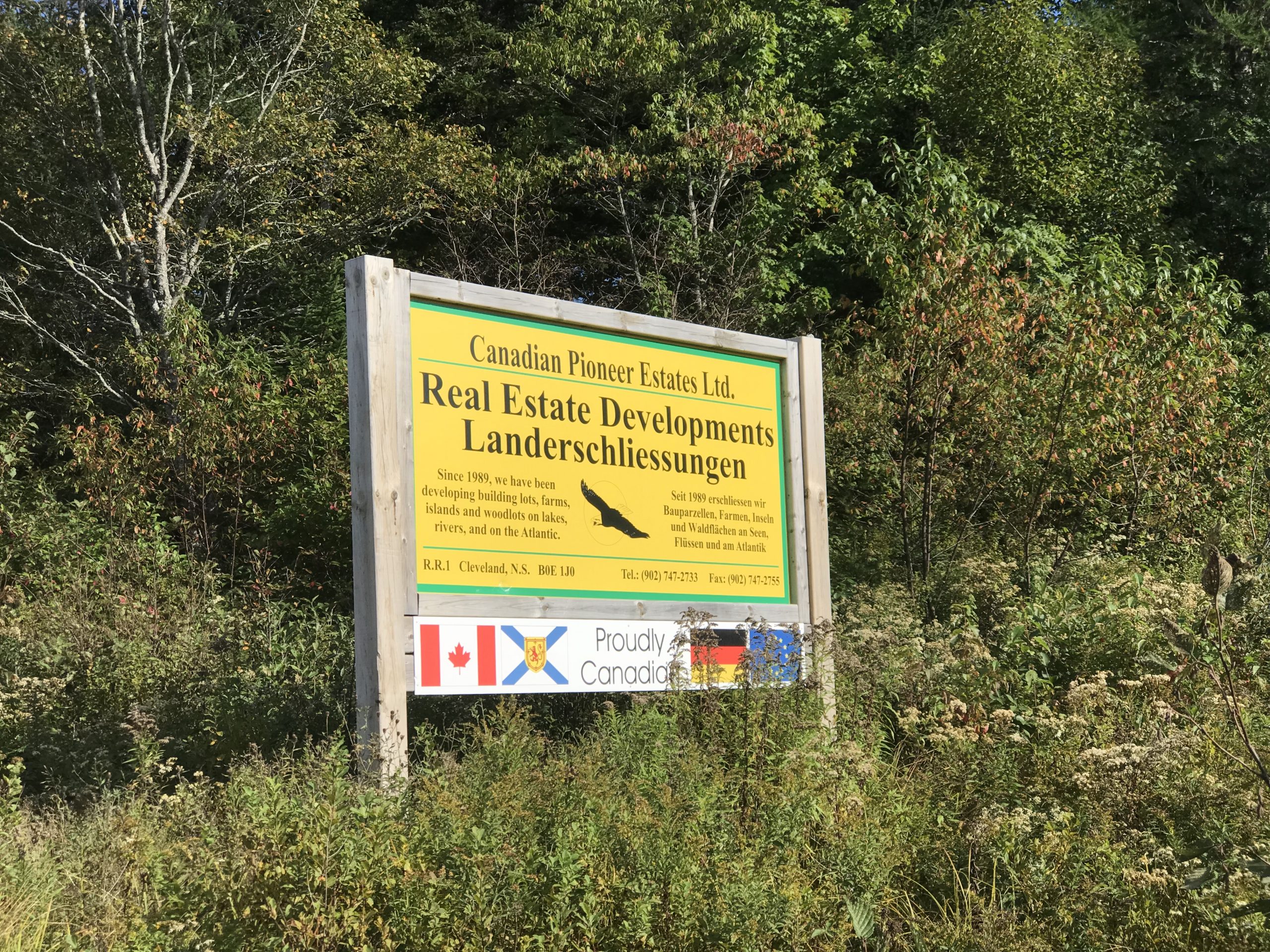
Canadian Pioneer Estates billboard in Richmond County, Cape Breton. Photo by Joan Baxter

Canadian Pioneer Estates sign in Richmond County, Cape Breton. Photo: Joan Baxter

The question of whether those who own land, reside and pay taxes in Nova Scotia should pay lower property taxes than those who do not has been debated, discussed, and disagreed on since the 1960s.

Read more

This article was originally published by the Halifax Examiner on November 23, 2021. Note that since it was first published, Frank Eckhardt who is featured in this article, has been arrested twice in Cape Breton, once on extortion charges, and a second time for a slew of firearms offences.

Sign on Highway 4 in Cape Breton advertising waterfront for sale on the Bras d'Or Lake. Photo by Joan Baxter

Photo: Joan Baxter

Nova Scotia has long been a popular place for settlers, but in the last century it also became a popular place for non-residents — including many well-heeled Americans and Europeans — to purchase properties.[1]

For decades, scholars and successive governments have debated the issue of non-resident land ownership in a province with relatively little Crown land, and waterfronts being carved up into private properties that reduce public access to Nova Scotia shorelines.

The COVID-19 pandemic has caused a real estate boom in Nova Scotia, including most rural counties, as people from urban centres, elsewhere in Canada and abroad, looked for ways to escape crowded areas.

A few months into the pandemic, the German magazine, Der Spiegel, broke the story that some right-wing conspiracy theorists were marketing Cape Breton to like-minded German-speaking Europeans, which added yet another dimension to long-standing questions about non-resident land ownership in Nova Scotia.

In this three-part series, the Halifax Examiner follows up on its 2020 coverage of this issue, and looks into some of the complex questions it raises, even as the province prepares to change the property tax rate for non-resident owners.

Read Part 1 here.

This second article looks at more of the real estate and land development companies or individuals marketing Cape Breton Island to German speakers, and at how the trend developed.

Evans Island bridge with gate. Photo by Joan Baxter

Evans Island bridge with gate. Photo: Joan Baxter

It would be easy to miss the turn-off to the island that juts out into the Bras d’Or Lake at Hay Cove in Cape Breton.

The only indication it’s there is an innocuous sign on the edge of Highway 4 in Richmond County that advertises “waterfront” for sale. If you follow the arrow on the sign, you’ll go about a kilometer on a dirt road to a gated bridge that leads to an island.

On the island side of the bridge is a road sign that indicates that you are now on Katja Rose Drive. Just past that is a large notice that trespassing and hunting are forbidden, which advises that the island and its roads are private property.

Sign for Katja Rose Drive on Evans Island. Photo by Joan Baxter

Katja Rose Drive on Evans Island. Photo: Joan Baxter

But the “waterfront for sale” sign did seem like an invitation to visit, so it seems OK to continue along Katja Rose Drive to see what is on the market.

On either side of the gravel road are small signs fastened to trees indicating lot numbers, some with small red “sold” signs in the trees. There are also some clearings with mobile homes on them.

One lot bears a “For Sale / zu verkaufen” sign with the name and contacts for a couple in Germany. For the three-acre property, the couple are asking $96,000, the price they paid for it. There is no well or septic system on the lot, and they tell a person who recently inquired about the property that there is a high risk around the Bras d’Or Lake of drilling a well and not finding good drinking water.

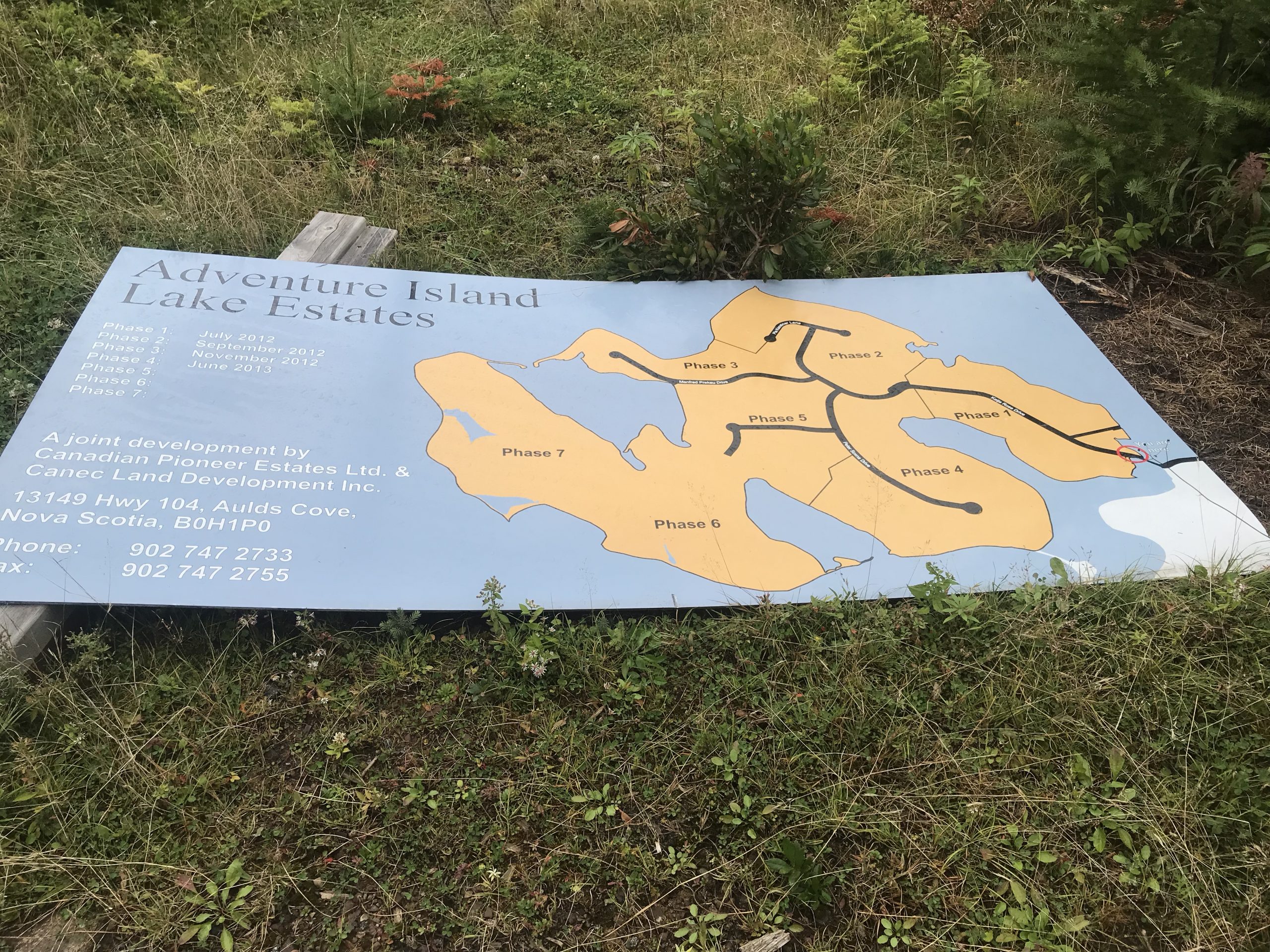
Further along Katja Rose Drive there is a large billboard that has fallen down on the side of the road, which lays out the development phases of subdivision called “Adventure Island Lake Estates,” a joint venture by Canadian Pioneer Estates and Canec Land Development Inc.

This photo shows a fallen-down signboard for the Evans Island development plan. Photo by Joan Baxter

Evans Island development plan. Photo: Joan Baxter

Welcome to Evans Island.

It has been carved into 129 lots, most about two acres, nearly all of them purchased by non-resident Germans.

Read more

This article was originally published by the Halifax Examiner on November 19, 2021.

Sign on Highway 4 in Cape Breton advertising waterfront for sale on the Bras d'Or Lake. Photo by Joan Baxter

Photo: Joan Baxter

Nova Scotia has long been a popular place for settlers, but in the last century it also became a popular place for non-residents — including many well-heeled Americans and Europeans — to purchase properties.[1]

For decades, scholars and successive governments have debated the issue of non-resident land ownership in a province with relatively little Crown land, and waterfronts being carved up into private properties that reduce public access to Nova Scotia shorelines.

The COVID-19 pandemic has caused a real estate boom in Nova Scotia, including most rural counties, as people from urban centres, elsewhere in Canada, and abroad looked for ways to escape crowded areas.

A few months into the pandemic, the German magazine, Der Spiegel, broke the story that some right-wing conspiracy theorists were marketing Cape Breton to like-minded German-speaking Europeans, which added yet another dimension to longstanding questions about non-resident land ownership in Nova Scotia.

This three-part series follows up on the 2020 coverage of this issue, and looks into some of the complex questions it raises, even as the province prepares to change the property tax rate for non-resident owners. The first of the three articles updates the story of conspiracy-minded German speakers promoting Cape Breton as a refuge.

This photo shows the gravel road into the Beaver Lake Estates properties that Golden Lake Estates has been selling to people in Germany over the past two years. Photo by Joan Baxter

Beaver Lodge Estates road. Photo: Joan Baxter

The new subdivision is called Beaver Lodge Estates, and at this point, it’s little more than a gravel road carved into the scrubby woodlands near Cleveland in Richmond County, Cape Breton, about a 15-minute drive east from Port Hawkesbury.

Google Maps Screen Shot showing Beaver Lodge Estates in its first phase

Google Maps Screen Shot showing Beaver Lodge Estates in its first phase

The 57 lots in the Beaver Lodge Estates — where no beaver lodge is visible, by the way — are very basic. And that’s being generous.

Some are still marked only by signs bearing lot numbers affixed to trees. Some are small clearings with no septic system or water supply, accessed by a driveway branching off the two-kilometre-long gravel road that has been driven through the wooded landscape.

Beaver Lodge Estates road in Richmond County, Cape Breton (Contributed)

Beaver Lodge Estates road in Richmond County, Cape Breton (Contributed)

So far, just four of the lots have homes on them, and only two of those are occupied.

This photo shows a Beaver Lodge Estates lot with prefab house. Photo by Joan Baxter

Beaver Lodge Estates lot with prefab house. Photo: Joan Baxter

The land development company behind the venture, Golden Lake Estates, says it is selling off the lots in phases.

Golden Lake Estates website showing Beaver Lodge Phase II. Screen Shot from September 30, 2021.

Golden Lake Estates website showing Beaver Lodge Phase II. Screen Shot from September 30, 2021.

“After the first and second phase of Beaver Lodge Estates were so well received, we were able to continue this development with the third phase and thus 16 more properties,” says the blurb on the website of Golden Lake Estates, the new name for the company that emerged after an “amalgamation” of Cape Breton Real Solutions in September 2020, which attracted negative press coverage in July and August that year.

More on that later, but first a look at who is snapping up Golden Lake Estates properties, and at what price.

Read more

Photography

A selection of Joan's images from around the world