• Fearless Reporting on the Climate Crisis & Corporate Power

    Fearless Reporting on the Climate Crisis & Corporate Power

    Fearless Reporting on the Climate Crisis & Corporate Power From exposing pulp mill politics to investigating 'green' hydrogen projects, Joan's investigative work holds corporations and governments accountable while amplifying community voices fighting for climate and environmental justice.

  • From Africa to Atlantic Canada: Stories of People & Places

    From Africa to Atlantic Canada: Stories of People & Places

    From Africa to Atlantic Canada: Stories of People & Places With over 30 years of international experience, Joan brings unique perspectives from seven African countries to her reporting on environmental challenges, public transport, and community activism in Canada.

  • That Matter: Environmental Justice & Corporate Accountability

    That Matter: Environmental Justice & Corporate Accountability

    Discover Joan Baxter's award-winning books, including "The Mill: Fifty Years of Pulp and Protest" and "Seven Grains of Paradise," alongside her investigative journalism exposing environmental issues and corporate capture across Canada and Africa.

A grey-haired man wearing a navy blue suit and red tie stands unsmiling behind another grey-haired man, with a wide smile, who is seated on a brown upholstery chair and signing a large red book. In the foreground on the desk are bouquets with orange, blue, and yellow flowers. On the wall behind the standing man is a painting of a landscape in a gilt frame, and on either side, an array of drooping flags, including the American stars and stripes on teh far left.

Prime Minister Mark Carney signs the White House guest book as President Donald J. Trump stands behind him in the White House on May 6, 2025. Photo by Lars Hagberg, provided by the Office of the Prime Minister © His Majesty the King in Right of Canada, 2025 (non-commercial use).

This article was first published by the Halifax Examiner on Dec. 18, 2025. Since then, the situation hasn’t improved, and Prime Minister Carney has stepped up the assault on the public service. Thousands of notices have gone out to federal public employees across government departments, slashing key climate and environmental research and policy programs. Those whose main source of information is National Post publications and other incurious, corporate and right-leaning media, tend to defend the cuts, parroting those media and social media messaging that glibly disparage the federal civil service as “bloated.”

Few would argue that there is always room for improving effectiveness and efficiency of large organizations – be they government departments or corporate bureaucracies. The Liberal government’s deep cuts to the public service is not that. It is a blunt force assault on crucial federal research and policy work, especially on anything involving environment, climate and sustainability, which looks more ideological than strategic. It is anything but well thought-out planning for an increasingly precarious future in a climate and biodiversity crisis, with a former neighbour and friend turned threatening foe.

In his much-touted and acclaimed speech at the World Economic Forum in Davos, Switzerland in Jan. 2026, Carney didn’t breathe the word “climate,” and referred only tangentially to the U.N. Conference of Parties (COP) that meets annually to hammer out policies to tackle the climate crisis, which he said was another of the multilateral institutions that is now “under threat.” Yet Canada’s prime minister didn’t bother attending the 2025 COP in Brazil

Carney’s Liberals are doing the work of Conservatives, pleasing moneyed moguls and their cheerleaders by making deep cuts in Environment and Climate Change Canada, Infrastructure, Housing and Communities Canada, Fisheries and Oceans Canada, Agri-food and Agriculture Canada, Global Affairs Canada, and the Canadian Food Inspection Agency that reports to the Minister of Health, among others. Carney’s government is cutting seven key agricultural research facilities, cuts the National Farmers’ Union calls “disastrous.” This includes  Nova Scotia’s Nappan Research Farm in Cumberland County, established in 1887, which does important forage and climate research.

By weakening the public service and Canada’s own research and scientific capacity that leads to strong federal policies and protections for Canadians, Carney is doing the opposite of nation-building, and making this country stronger in the face of continued threats from our increasingly hostile neighbour to the south, led by a volatile and unhinged bully.

It’s a long read, because it’s a long and complex story … 

The Carney way

It’s beyond terrifying watching U.S. President Donald Trump and his bullying, brash, and crass coterie of odious hatemongers destroying decency, building autocracy, and dismantling democracy to Canada’s south.

The trouble is that it can be all-consuming watching the gilded, gold-plated shitshow in the U.S. That means it’s easy to miss what’s happening closer to home.

Liberal democracy is a fragile thing that can be undermined in many ways. Not all star a malignant narcissist spewing non-stop lies and insults, working with a tyrannical cabal of billionaires, tech bros and bigots and sycophants, to unleash non-stop “Truth Social” turmoil on a country – and the planet.

Democracy and genuine human progress on social, environmental, and climate issues can be weakened much more quietly, subtly, and methodically, and with much less media scrutiny than is being accorded the autocratic blowhard to the south.

These can also be undermined by sophisticated and polite people wearing pleasant smiles using polite words, charmers who post videos of themselves patting adorable kitties.

The damage can be done in an understated, toned-down way, without a lot of fanfare, with policies that increase economic disparity, channel money and power upwards, put people and their futures at risk, harm the environment, and torch the climate.

And so far, that seems to be the Carney way.

Read more

A stone monument in a dry grassy field, on which is mounted a teal green sign, with the words "EVERWIND TERMINALS" and a stylized graphic circle in green and dark blue on the left of the sign.

This article was first published by the Halifax Examiner on Sept. 2, 2025. 

On August 13, 2025, Kristen Overmyer submitted a complaint against EverWind Fuels to the Competition Bureau of Canada, alleging the company has been “making unsubstantiated and false, green claims promoting ammonia production from Nova Scotia renewable energy.”

According to Overmyer, a Nova Scotian with a masters degree in mechanical engineering, recent provisions made to Canada’s Competition Act prohibit “misleading representations commonly known as ‘greenwashing,’” and require “that any such claim be substantiated by proper tests or internationally recognized methodologies.”

Overmyer’s concerns stem from EverWind’s assertions that the hydrogen and ammonia it aims to produce in Point Tupper using electricity from wind projects it has planned in Nova Scotia will “mitigate climate change by reducing global CO2 emissions.”

Overmyer takes issue with, and offers detailed calculations, to allege that three EverWind claims are not just unsubstantiated, they are “misleading” to the public:

  1. EverWind Fuels will use only zero or low CO2 intensity, renewable energy in the production of their hydrogen and ammonia.
  2. Therefore, the hydrogen and ammonia products produced from this renewable energy will be zero- or low-carbon, thereby meeting Canadian and European green standards.
  3. Finally, the use of these zero- or low-carbon products in lieu of their high carbon, fossil fuel-based equivalents will reduce CO2 emissions thereby mitigating climate change.
Read more

Sign for Northern Pulp at the entrance to the Pictou County pulp mill declaring Northern Pulp is a Paper Excellence company. Photo from 2021.

This article was first published by the Halifax Examiner on August 25, 2025. 

Article summary:
• Over the lifetime of the Northern Pulp mill, Nova Scotia lost hundreds of millions of dollars because of incompetent, naive, and complicit governments.

• As Northern Pulp’s billionaire Indonesian owners have opted not to build the new mill and instead allow the company to go into bankruptcy, 420,000 acres of Nova Scotia forest land are up for grabs.
• A shadowy company called Macer Forest Holdings has placed an under-valued bid of $104 million on the land.
• A Macer-affiliated company called Acadian Timber looks poised to log that land.
• One of Acadian’s board members, paid $56,000 annually, is Karen Oldfield, the interim president and CEO of Nova Scotia Health.
• Maurice Chiasson, a lawyer who represented the province in the Northern Pulp insolvency hearings, is now representing Macer Forest Holdings in the very same court process.
• As the government is mandated to protect 20% of the province and is far short of meeting that obligation, buying back the Northern Pulp land presents an inexpensive opportunity to meet that goal.


It was clear from the start of Northern Pulp’s insolvency case filed in the British Columbia Supreme Court six months after the Northern Pulp mill closed, that the outcome was never going to be good for Nova Scotia.

Spoiler alert: the outcome is not only not good, it’s downright bad.

Legal giveaways and concessions by successive generations of Nova Scotian governments to the various large foreign owners of the pulp mill meant Northern Pulp had all kinds of legal recourse to punish Nova Scotia for not amending the 2015 Boat Harbour Act, and not allowing the mill to continue to pump toxic effluent into Boat Harbour, which had despoiled the Pictou Landing First Nation estuary for half a century.

When Northern Pulp failed to come up with a viable new effluent treatment system that passed environmental muster by the deadline of 2020, the mill had to shut down.

Read more

A giant white pickup truck with raised suspension and massive wheels is parked in front of a small black car on a gravel parking lot.

This article was first published by the Halifax Examiner on October 28, 2024. It is the third and final article in a series looking at the ongoing trend in North America for ever bigger and taller pickups and SUVs, and some of the problems these pose both for human health and safety, and for the health of the planet. In this article we look at what governments in Canada could, at least in theory, do to tackle the bloat. Part 1 is available here and Part 2 is available here.

For 10 years Ben MacLeod watched from afar what was happening in his home town of Halifax, and was pleased to see HRM Council undertaking “progressive initiatives” on traffic safety, and the “gradual construction of the bike lane network.”

“It was exciting to see them moving in the right direction,” he said in an interview.

MacLeod, an urban planner and sustainable transportation advocate, had moved to Hong Kong in 2012, and in 2022 moved back to Halifax, where he grew up.

“I was excited to come back to see what’s changed,” he said.

What MacLeod didn’t bargain on, what made him “a little bit shocked” when he got home, however, was the “design trends” in the vehicles on the roads, and how prevalent big vehicles had become.

“Eighty-six percent of new vehicles in Canada are now SUVs [sports utility vehicles] and pickup trucks, which is shocking,” said MacLeod, who doesn’t own a car and mostly gets around on foot or on bicycle.

Read more

A large black and shiny GMC pickup in a parking lot, with a smaller silver Tucson SUV on its right. Behind the pickup, underneath the large green letters saying "Sobeys" is the entrance to the store.

This article was first published by the Halifax Examiner on October 25, 2024. 

This is the second in a series of three articles looking at the ongoing trend in North America for ever bigger and taller pickups and SUVs, and some of the problems these pose both for human health and safety, and for the health of the planet. In this article we look at what has driven the trend, and what it means for the climate, the environment, and our cities. Part 1 is available here, and part 3 here

In March 2022, Lisa Roberts – a former journalist and NDP MLA in Nova Scotia – wrote an opinion piece for the erstwhile Atlantic Canadian Saltwire media network. Her piece was called ‘Trail of tragedy follows pickup trucks.’

In it, Roberts said she winced when she heard about yet another pickup truck striking a cyclist in Halifax, sending the cyclist to hospital with “life-threatening injuries.” That reminded her of two other collisions that “shattered families” the previous year, both involving a pickup truck colliding with a pedestrian or a smaller vehicle.

“Larger, heavier vehicles mean more serious injuries and not for those in the larger, heavier vehicle,” Roberts wrote. “And trucks have gotten larger without being more functional. My grandfather’s pickup truck, which hauled firewood regularly, was easier to get into and had a longer bed.”

“For the sake of our health and safety, we have to talk about trucks,” Roberts urged.

So far, it appears Roberts’ plea for a meaningful conversation about large pickups has gone largely unheeded in this part of Canada.

Read more

A new and very shiny large silver-grey pickup in a car dealer lot, with a massive chrome grille, and the letters, GMC, in red in the middle of the grille.

This article was originally published by the Halifax Examiner on October 24, 2024. It is the first of a three-part series. Part 2 is available here, and part 3 here

Why this series

Just after the turn of the millennium, in 2002, American journalist Keith Bradsher wrote a book called High and Mighty. SUVs: the most dangerous vehicles and how they got that way.

The book begins: “Sport utility vehicles have taken over America’s roads during the last decade, and are on their way to taking over the world’s roads. The four-wheel-drive vehicles offer a romantic vision of outdoor adventure to deskbound baby boomers.”

Bradsher continues:

Yet the proliferation of SUVs has created huge problems. Their safe image is an illusion. They roll over too easily, killing and injuring occupants at an alarming rate, and they are dangerous to other road users, inflicting catastrophic damage to cars that they hit and posing a lethal threat to pedestrians. Their “green” image is also a mirage, because they contribute far more to smog and global warming … The success of SUVs comes partly from extremely cynical design and marketing decisions by automakers and poorly drafted government regulations. The manufacturers’ market researchers have decided that millions of baby boomers want an adventurous image and care almost nothing about putting others at risk to achieve it, so they have told auto engineers to design vehicles accordingly. The result has been unusually tall, menacing vehicles like the Dodge Durango, with its grille resembling a jungle cat’s teeth and its flared fenders that look like bulging muscles in a savage jaw…

Cadillac, a division of General Motors, rushed the Escalade onto the market in 1998, a little over a year after the Lincoln Navigator went on sale and was an instant hit. To make the Escalade, GM essentially put lots of chrome and optional equipment on a GMC Yukon Tahoe SUV. The Tahoe, in turn, uses the underbody and a lot of other parts from the full-size Chevrolet Silverado pickup truck. So Cadillac was essentially taking a [US]$20,000 work truck, tricking it up with lots of chrome, leather seats, and a fancy stereo, and selling it for close to [US]$50,000. This is how automakers have earned enormous profits on full-sized SUVs.

That was 22 years ago.

Since then, everything Bradsher predicted has occurred, possibly even exceeding his gloomy forecast. The vehicles have grown much bigger and even more menacing, and far more numerous, marketed to more and younger demographics. Compared with the front ends of today’s pickups, the grille of the Dodge Durango of yesteryear looks as harmless as a kitten’s nose. In 2024, the best-selling vehicles in the U.S. were the Ford F-series, the Chevy Silverado, and the Ram pickup trucks, with some starting at over $100,000.

In 2023, for every regular passenger car sold in Canada, six trucks — primarily larger pickups, SUVs, and vans — were sold. The same is true in Nova Scotia.

Across North America, road safety and environmental groups have been blowing the whistle on this vehicle bloat for years, and numerous studies show that big vehicles threaten lives and living environments. Even The Economist recently ran a front-page story about big cars and pickups killing Americans. But so far in Canada, regulators don’t seem to be listening.

This series of three articles looks at what is driving the trend for ever bigger and higher pickups and SUVs, and the many reasons this is bad for people, roads, cities, the environment, and the climate. We start by looking at the risks these oversize vehicles pose to other road users.  

Read more

Photography

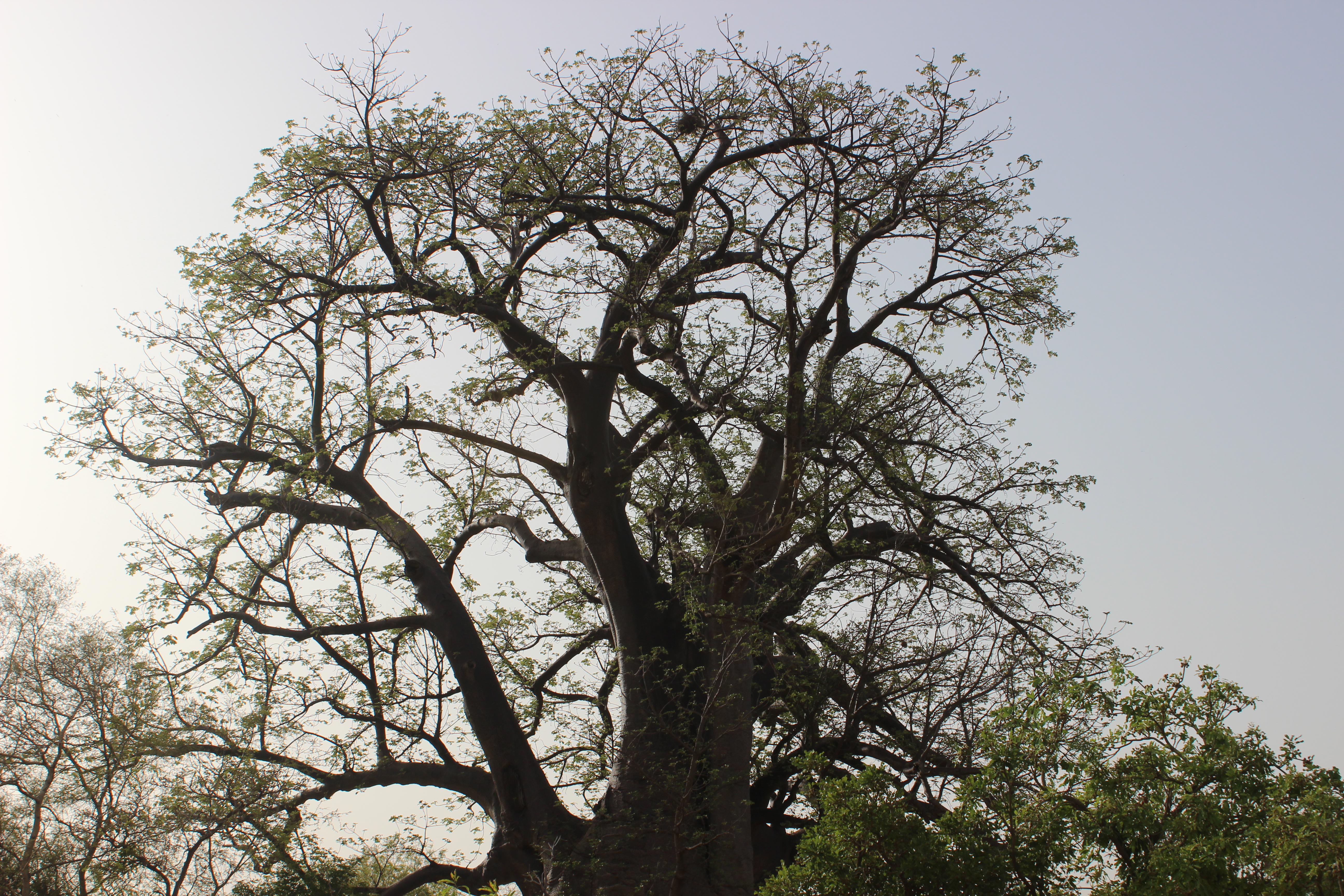
A selection of Joan's images from around the world