

BY: Joan Baxter
About 10 million people — o r more — perished in Belgian King Leopold’s Congo during the late 1800s and early 1900s.[i] In addition to the horrific human toll, another shocking thing about Leopold’s plundering of his huge African colony is that he managed to convince so many in Europe and the United States that his apparatus of exploitation and wealth collection was humanitarian and philanthropic, that his intention was to benefit the “natives”, help end the slave trade and bring “civilization”, and to further scientific endeavour.
Back then, there weren’t legions of communications and public relations specialists for hire to transform bad into good, to spin sin into virtue, and tailors who convinced naked emperors they were clad in robes of gold existed only in fairy tales. So the campaign of deception about Leopold’s actual intent in Africa probably started with the good king himself. He may genuinely have believed himself a noble fellow, and his right to conquer and pillage a chunk of Africa about 77 times the size of his own nation something that God granted his royal self.
Thankfully, times have changed.
Or have they?

 Not even 50 kilometres from the disputed land lease taken out by the Siva Group in Kpaka Chiefdom in Sierra Leone’s Pujehun District, where angry youth leaders and local chiefs are denouncing their Paramount Chief for signing away their precious farmland, there is similar discontent and dis-accord over a land deal in the Malen Chiefdom. There, Socfin Agricultural Company (SL) Ltd, or SAC, has leased 6,575 hectares and converted more than half of that into monoculture oil palm plantation. It is now seeking to lease and plant an additional 5,500 hectares, for a total of 12,000.
 Atop the Siva Group is another reputed billionaire, the
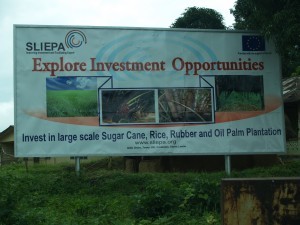


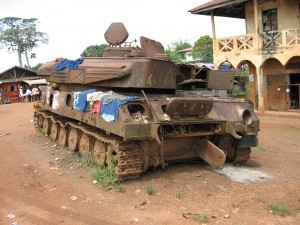 So it was that in late 2009, Sierra Leone’s President Ernest Bai Koroma took the podium at the Sierra Leone Trade and Investment Forum at the Queen Elizabeth II Conference Centre in London, England. The country was still better known internationally for “blood diamonds” and a brutal civil war they fuelled, than for its impressive peace-building efforts in the ten years since the war ended. President Koroma wanted to change that.