Neoliberalism

BY Joan Baxter

Ma Coulibaly selling fresh okra in the Medina Market in Bamako, Mali (photo by Joan Baxter)

Ma Coulibaly selling fresh okra in the Medina Market in Bamako, Mali (photo by Joan Baxter)

It certainly flies in the face of an awful lot of stereotypes and headlines about hunger and malnutrition, but it turns out that Africa has much to teach the world about healthy eating.

A 2015 study published by The Lancet Global Health journal looked at the consumption of food (both healthy and unhealthy items) and nutrients in 187 countries in 1990 and then again in 2010. The aim was to determine which countries had the world’s healthiest diets.

It found that none of the healthiest ten diets is in a wealthy Western nation, nor are any in Asia. Most were found in Africa, which is so often portrayed as a continent of constant famine in need of foreign know-how and advice on how to eat and to grow food.

And yet, of the ten countries with the healthiest diets on earth, nine of them are African.

What’s more, the three countries with the very best diets are some the world’s poorest. Chad, ranked as having “very low human development”, 185th of 188 nations on the United Nations 2015 Human Development Index, has the world’s healthiest diet. After that come Sierra Leone and Mali, 181st and 179th on the same Index.

Read more

BY Joan Baxter

Bill Gates hobnobs with elected leaders at COP21 in Paris. Copyright DW/ N. Pontes

Bill Gates hobnobs with elected leaders at COP21 in Paris. Copyright DW/ N. Pontes

In many places and among many people, he’s revered, a man whose charitable giving accords him selfless, almost saint-like status. But it’s not as if Bill Gates, founder of Microsoft, is actually shedding any of his vast wealth, no matter how much noise is made about his generosity.

This year, for the sixteeth time in just 21 years, Bill Gates tops the Forbes list of the richest people in the world. With 1,826 billionaires on that list in 2015, worth a total of US$ 7.05 trillion, it’s no small feat to be Number One.

Gates (unlike genuine saints) is very good at making money from money; according to Forbes in the past six years he has almost doubled his fortune and is now worth nearly $80 billion. That’s a good deal more than the Gross Domestic Product of 46 of the 49 countries in sub-Saharan Africa.

This despite his reputation as the world’s number one giver-of-money and “philanthropist”, determined to “help thousands and millions” out of poverty.

Read more

BY Joan Baxter

“The earth, our home, is beginning to look more and more like an immense pile of filth.” This hard truth comes from a 183-page document that makes a plea for our species to come to our senses and hear “the cry of the earth and the cry of the poor”.

It’s a powerful cri de coeur for humankind to stop the plunder of the planet, confront climate change and end unfettered capitalism that is driving the destruction and disparity between rich and poor. It continues: “Many of those who possess more resources and economic or political power seem mostly to be concerned with masking the problems or concealing their symptoms, simply making efforts to reduce some of the negative impacts of climate change.”

Strong words, revolutionary even. The kind of language one might expect from the environmental or social justice groups often labelled “radical” or “extremist” by the powerful elites these statements condemn.

But they’re not. They come from the Encyclical written by Pope Francis, arguably the single most influential man on the planet as spiritual leader of 1.2 billion Catholics around the world.

Read more

The beautiful worn stones of a Nova Scotia beach, this one in Guysborough County

BY: Joan Baxter

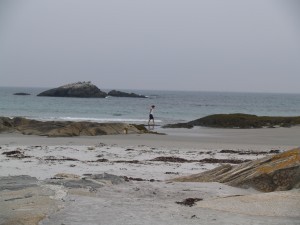
P8194822-300x225On a balmy, overcast August day, I stood at Port Joli Head in the Kejimkujik Seaside park on Canada’s Atlantic coast, nibbling on delectable little beach peas, staring out over the windswept beaches of white sand and rounded weathered grey stones, and at blue waves exploding white against magnificent rocks of granite as the ocean waters nudged relentlessly at the southern shore of Nova Scotia.

Just offshore, fat seals lounged on rocky islands, ensconced there like complacent and over-indulged Roman emperors. I envied them their thick layers of blubber that allowed them to slip happily in and out of the frigid crystalline waters, for their ability to live without a single thing but their own thick coats and their seal brains. And being in the national park, they didn’t need to worry about human predators as they lazed about on the rocks. They completely – almost insolently – ignored the human beings gaping at them through binoculars.

The park’s interpretive signs informed hikers that 18,000 years ago this area was covered by a sheet of ice three kilometres thick, and the land mass we now call Nova Scotia extended fifty kilometres out to sea. As the ice slowly retreated about 13,000 years ago, the sea level rose and the waters crept ashore, swallowing up land, even as the land itself was rising, heaving a sigh of relief as the weight of the ice diminished. That was naturally-induced climate change, caused by minute alterations in the earth’s tilt in its orbit that have brought about cycles of ice ages and periods of warming. Such change is gradual, happening over thousands of years. Life forms can adapt to the changes by evolving or finding new niches in which to live.

But that has not always been the case in our planet’s history. Between about 440 and 65 million years ago, there were five Great Extinctions, each of which wiped out the majority of the species on earth at the time. Scientists believe these were triggered by cataclysmic events — giant asteroid impacts and the eruption of flood basalts when molten rock bursts through the earth’s surface — that involved the release of enormous amounts of dust and sulphur dioxide into the Earth’s atmosphere. But it was the dramatic climate change the cataclysms invoked that caused the great extinctions.

Today, we’re in the middle of what is called the Sixth Great Extinction. The cataclysmic event causing it? We, the people. Human beings. Homo sapiens sapiens, literally “wise or knowing humans”.

Read more

BY: Joan Baxter

Dear Mr. Harper,

I am worried about you, I mean truly, deeply worried about you. It’s not that you haven’t worried me before. You and your political agenda cooked up to serve the wealthy made me leery long before you slipped, serpent-like, right through the schools of squabbling Liberals and NDP in 2006 to form a minority Conservative government.

But since you got your majority – even if only with a minority of the popular vote – it looks as if the power is doing very dangerous things to your head, as absolute power does. And like many of my fellow Canadians, I am sick with worry about what that means for the country.

Many democracies around the world limit the number of terms or length of time that elected leaders can stay in power. The idea is that no one person should taste power for too long; it is too addictive and it clouds judgement, brings on delusions of infallibility. Alas, Canada doesn’t have such a limit. And it doesn’t seem as if you have any in-built mechanism to tell you that enough is not just enough, it’s too much, that it’s time for you to quit. Retire gracefully. Watch lots of hockey and write another book about it, bang about on the piano, hang about at Tim Hortons, take up Tiddlywinks, whatever it is that turns you on – besides humiliating and destroying everyone that doesn’t agree with you, that is.

But it seems you’ve imbibed too much of the elixir of power and want to stick around, seek another mandate. At least that’s what you said in your recent interview with Peter Mansbridge on CBC, the public broadcaster that I fear will no longer be recognizable if you stay on as Prime Minister, just like Canada itself.

Read more

The magnificent ocean vista on Nova Scotia's Eastern Shore

BY: Joan Baxter

My dearly beloved, but bruised and much-abused Canada,

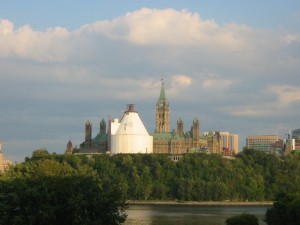
09.02.2005-parliament-from-gatineau-300x225I wish I were writing to you under better circumstances, and not when you are at such a low point in your history, so badly abused by the Harper Government. I can’t even say by the “Government of Canada”; that name has been stolen from you, replaced with that of the man who has taken you hostage.

Some would argue that because he was elected as prime minister, Stephen Harper can do what he wants with you. And if his regime wants to rewrite history, suppress science, reject reason, present lies as truth and war as peace, drag you back into the Dark Ages – to change you so much and in so many ways that you are no longer recognizable (as he threatened to do back in 2006) – that reflects the will of the Canadian people that elected the Conservatives.

But, I would argue, dear Canada, that this isn’t so.

Read more