Corporate Power

BY: Joan Baxter

Dear Mr. Harper,

I am worried about you, I mean truly, deeply worried about you. It’s not that you haven’t worried me before. You and your political agenda cooked up to serve the wealthy made me leery long before you slipped, serpent-like, right through the schools of squabbling Liberals and NDP in 2006 to form a minority Conservative government.

But since you got your majority – even if only with a minority of the popular vote – it looks as if the power is doing very dangerous things to your head, as absolute power does. And like many of my fellow Canadians, I am sick with worry about what that means for the country.

Many democracies around the world limit the number of terms or length of time that elected leaders can stay in power. The idea is that no one person should taste power for too long; it is too addictive and it clouds judgement, brings on delusions of infallibility. Alas, Canada doesn’t have such a limit. And it doesn’t seem as if you have any in-built mechanism to tell you that enough is not just enough, it’s too much, that it’s time for you to quit. Retire gracefully. Watch lots of hockey and write another book about it, bang about on the piano, hang about at Tim Hortons, take up Tiddlywinks, whatever it is that turns you on – besides humiliating and destroying everyone that doesn’t agree with you, that is.

But it seems you’ve imbibed too much of the elixir of power and want to stick around, seek another mandate. At least that’s what you said in your recent interview with Peter Mansbridge on CBC, the public broadcaster that I fear will no longer be recognizable if you stay on as Prime Minister, just like Canada itself.

Read more

The magnificent ocean vista on Nova Scotia's Eastern Shore

BY: Joan Baxter

My dearly beloved, but bruised and much-abused Canada,

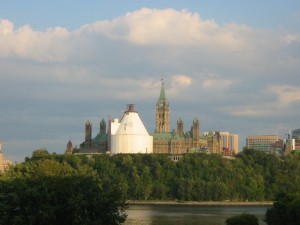
09.02.2005-parliament-from-gatineau-300x225I wish I were writing to you under better circumstances, and not when you are at such a low point in your history, so badly abused by the Harper Government. I can’t even say by the “Government of Canada”; that name has been stolen from you, replaced with that of the man who has taken you hostage.

Some would argue that because he was elected as prime minister, Stephen Harper can do what he wants with you. And if his regime wants to rewrite history, suppress science, reject reason, present lies as truth and war as peace, drag you back into the Dark Ages – to change you so much and in so many ways that you are no longer recognizable (as he threatened to do back in 2006) – that reflects the will of the Canadian people that elected the Conservatives.

But, I would argue, dear Canada, that this isn’t so.

Read more

BY: Joan Baxter

About 10 million people — opg-34-king-leopold-_403867s-267x300r more — perished in Belgian King Leopold’s Congo during the late 1800s and early 1900s.[i] In addition to the horrific human toll, another shocking thing about Leopold’s plundering of his huge African colony is that he managed to convince so many in Europe and the United States that his apparatus of exploitation and wealth collection was humanitarian and philanthropic, that his intention was to benefit the “natives”, help end the slave trade and bring “civilization”, and to further scientific endeavour.

Back then, there weren’t legions of communications and public relations specialists for hire to transform bad into good, to spin sin into virtue, and tailors who convinced naked emperors they were clad in robes of gold existed only in fairy tales. So the campaign of deception about Leopold’s actual intent in Africa probably started with the good king himself. He may genuinely have believed himself a noble fellow, and his right to conquer and pillage a chunk of Africa about 77 times the size of his own nation something that God granted his royal self.

Thankfully, times have changed.

Or have they?

Read more

Mali

By: Joan Baxter

Despite all the problems there are with Band Aid 30’s “Do They Know It’s Christmas, few would take issue with the noble sentiment of the stirring chorus line near the end of the song that exhorts us to “feed the world”.

Just as I’m left wondering where, exactly, the funds raised by Bob Geldof’s charitable efforts will go “to fight the Ebola crisis” in West Africa, I am also curious about what, exactly, they are thinking the world should be fed with.

I’m not just being ornery; this is an important question.

We live on a planet that is plagued by hunger and periodic famine, caused increasingly by climate change, conflict, politics, perverse policies and poverty. According to the United Nations Food and Agriculture Organization (FAO), close to a tenth of the world’s population does not have enough food to lead a healthy active life.

At the same time, there is also a good deal of excessive consumption of calories that has led to another kind of global health crisis.

Read more

2009-11-09-ROAD-to-KONO-Addax-village-001-300x225We were meeting under a thatch roof at the makeshift headquarters of Addax Bioenergy in northern Sierra Leone. Aminata Koroma, Social Liaison Officer for the company, was extolling for me the virtues of the project that was transforming great swaths of farmland, grassland and woodland around us into massive sugarcane plantations. Addax Bioenergy, part of the Addax & Oryx Group headed by Swiss billionaire Jean-Claude Gandur, had recently leased more than 50,000 hectares in the area, with the intention of processing the sugarcane to produce ethanol for export to Europe, where it would be used to fuel vehicles. Koroma was more than enthusiastic about the project, despite a good deal of local opposition among farming communities.

I was challenging her about the wisdom of transforming the diverse countryside, much of it used for farming, into monocultural plantations of sugarcane. She responded that there would be “environmental corridors”, and that they were going to have a “tree-planting day”.

To make way for its sugarcane plantations in Sierra Leone, Addax Bioenergy had to fell many trees, including ones that produce valuable food such as kenda.

To make way for its sugarcane plantations in Sierra Leone, Addax Bioenergy had to fell many trees, including ones that produce valuable food such as kenda.

I countered that I had seen the bulldozers taking down valuable indigenous leguminous trees that did not lend themselves well to planting, such as the locust bean tree, or Parkia biglobosa. This tree is cherished through West and Central Africa because of its many medicinal properties, the sweet edible yellow powder that is harvested from its pods, and its seeds that are fermented and prepared to produce an extremely nutritious and tasty condiment that has long been a mainstay in local cuisines. In Sierra Leone it’s known as kenda.

“Nobody’s planting those trees, the ones that produce kenda,” I said to Koroma. “They grow naturally, they’re not cultivated.”

“Why are you thinking about producing kenda?” she retorted. “ I mean, we call it the poorest man’s food. There is even a song that says, ‘kenda and dry rice, na poor man’s choice’.” She said that the only people in Sierra Leone who ate kenda were people who could not afford the modern alternative, the chemical-ridden Maggi cubes from Nestlé. For her, traditional foods such as kenda had no place in a modern diet. She seemed to think my defence of the condiment and the diverse local farms that produced traditional crops meant I was backward. Against progress and development.

Read more

Previously: Billionaires at play in the fields of the poor (part 5) Chinnakannan Sivasankaran

There is a great deal of buzz about Africa’s economic awakening, with some countries experiencing substantial growth in gross domestic product that is being driven by waves of foreign capital, as investors from Asia, Europe, North America, the Middle East and also Latin America descend on the continent. Many of the investors are after natural resources, mineral and oil riches and also farmland. This raises the question: is the foreign investment benefitting the continent or is it just another scramble for Africa, the last stage of colonialism? In this, the last of six articles on the issue, Joan Baxter profiles another of five billionaire investors in Sierra Leone, French national Vincent Bolloré and his complex investment portfolio in Africa. The article concludes the series by looking at how even if the wave of foreign investment in Sierra Leone benefits the country.

 Billionaire investors and prosperity for whom?

P1011484-300x225Not even 50 kilometres from the disputed land lease taken out by the Siva Group  in Kpaka Chiefdom in Sierra Leone’s Pujehun District, where angry youth leaders and local chiefs are denouncing their Paramount Chief for signing away their precious farmland, there is similar discontent and dis-accord over a land deal in the Malen Chiefdom. There, Socfin Agricultural Company (SL) Ltd, or SAC, has leased 6,575 hectares and converted more than half of that into monoculture oil palm plantation. It is now seeking to lease and plant an additional 5,500 hectares, for a total of 12,000.[i]

SAC is 85 percent owned by Socfinaf,[ii] part of the extremely complex Socfin [Société Financière des Caoutchoucs] Group, with its contact address[iii] in Luxembourg, a ”major” secrecy jurisdiction at the ”dirty” end of the spectrum. [iv] Thirty-nine percent of the shares of Socfin are held by the Bolloré Group,[v] of which the prominent French billionaire Vincent Bolloré is Chair and Chief Executive Officer. Although the Group is listed on the Paris stock exchange, the Bolloré family holds ”majority control of the company through a complex and indirect holding structure”.[vi] The major shareholders of SOCFIN SA are all very much associated with the Bolloré Group, as they are controlled by the Fabri or de Ribes families, who are intertwined in the various interconnected companies.

Read more