Media

A narrow gravel road, flanked by granite rocks, winds through scrubland, under a grey sky. Some snow is still visible on the sides of the road.

This commentary was first published by the Halifax Examiner on June 16, 2025.

On May 2, 2025, the Canadian Geographic published a heart-warming tale, initially headlined, “From fishing to rockets — Canso, N.S. could be entering the space race: U.S.-imposed tariffs could tip the scales on a proposed spaceport near Canso, N.S.”

This is the quaint start to the story:

Nestled on the northeast coast of Nova Scotia is Canso, a town of 71,000 known for its lighthouses and incredible fishing. But the region, located on the traditional lands of the Paqnkek [sic] Mi’kmaw Nation, may soon have another claim to fame — as the home base for an active spaceport.

Maritime Launch Services wants to launch Canadian-made rockets over the Atlantic Ocean, sending satellites around the poles or over the equator as needed. While these plans remain at an early stage, the community is already preparing to host the initial influx of staff who have arrived to oversee the construction and early development of its facility.

The story is about the wannabe spaceport that Maritime Launch (MLS) has been telling anyone who would listen – for years now – that it plans to build in Canso, so it can launch rockets into orbit from this easternmost point of mainland Nova Scotia.

The article quoted MLS CEO Stephen Matier, who pledged “MLS could launch its first orbital mission as soon as 2026, providing Canadian companies a sovereign solution to send their satellites to space.”

Spaceport fueled by media hype and fumes

The Canadian Geographic article is just the latest of many media fluff and puff pieces that rehash phantastic MLS claims about Matier’s spaceport project in Canso.

MLS has benefited from a lot of beyond-credulous reporting from Space Q. Already in 2017, Space Q was repeating MLS claims that the company planned to begin construction of the spaceport in May 2018.

In 2023, the Globe and Mail hosted an hour-long webcast featuring Stephen Matier, who was not once challenged or fact-checked. The Globe and Mail webcast, called “The Space Economy: What could the commercial space age mean for Canada?,” was sponsored by none other than MLS.

Such reporting lends credibility to Matier’s boasts about the MLS spaceport project, as does the support from credulous politicians.

Some major political figures showed up for the launch of a small student rocket in the summer of 2023, including Canada’s former defence minister Peter MacKay, Nova Scotia’s former premier Stephen McNeil, the province’s then minister of education and early childhood development Becky Druhan, Progressive Conservative MLA Greg Morrow, and the director of the Canadian Space Agency.

The author of the Canadian Geographic article, Elizabeth Howell, associate editor of MLS-media-cheerleader-in-chief, Space Q, wrote a gushing piece about the student launch headlined “MLS, space community celebrates [sic] debut student rocket launch at Spaceport Nova Scotia.”

Read more

A historic-looking, three-storey stone building with tall, elegant windows,framed by a few tree branches, and fronted by green lawn and garden, with a winding path leading towards the building. Credit: Communications Nova Scotia

This article originally appeared in the Halifax Examiner in January 2021, but it is more relevant than ever. The provincial government may have changed, but media relations policies and lack of government openness have not. Meanwhile, media outlets and the number of journalists in Canada have continued to shrink, while the number of communications people and the onslaught of PR and propaganda have continued to grow. In his important 2023 book, Manipulating the message: how powerful forces shape the news, Cecil Rosner notes, “There are fewer than 12,000 reporters in Canada compared to nearly 160,000 employees in the advertising, public relations, and communications industry.” And those are Statistics Canada figures from 2023. Since then, several Canadian media outlets have made even more cuts to their news rooms and numbers of journalists. Because Meta is blocking all media on its platforms in Canada, I have decided to post more of my Halifax Examiner articles on this website, which – so far – Facebook and Instagram are not blocking. 

Unbeknownst to many people — and definitely unbeknownst to me before I returned to Nova Scotia after many years of working overseas and resumed reporting here in 2016 — journalists do not have quite the same rights that other citizens do in this province.

Apparently we journalists are not supposed to try to get into direct contact with government experts or scientists or officials, as other citizens can do. Rather, all journalists’ inquiries to the Nova Scotia government are supposed to go through media relations people.

At least this is what I was told in May 2018.

This is how I learned that lesson.

Someone had sent me an online notice from the provincial government about an upcoming meeting in Halifax. The meeting was to discuss the Canadian Minerals and Metals Plan that promotes the mining industry, so that Canada can “remain a global mining leader” (which is one way of depicting the tarnished reputation that Canadian mining companies have given Canada, causing environmental harm and human rights violations in countries all around the world).

I emailed the provincial government contact provided on the notice, Tracey Medynski, asking what opportunities there would be for media to interact with participants at the meeting, which was, after all, open to other citizens who registered in advance.

A reply came back from Don James, Executive Director of the Geoscience and Mines Branch, which had not yet been moved to the Department of Energy and Mines and was still part of the erstwhile Department of Natural Resources. James said there would be no opportunities for media at the meeting.

I wrote back to ask James why, if the meeting were a government-sponsored event as it clearly was, and if government employees were involved as they clearly were, the media would not have an opportunity to interact with them, so they could inform the public about the way their money was being spent on the Canadian Minerals and Metals Plan.

Read more

(An earlier version of this opinion piece appeared in the Halifax Examiner “Morning File” of January 15, 2021.)

The “sample copy” of the newspaper landed innocently enough in our house.

On Tuesday, January 12, 2021, Canada Post delivered a “complimentary” issue of  The Epoch Times right to our door in rural northern Nova Scotia.

It came with a “limited-time offer” for a special subscription deal to what looked – if one knew no better – like a normal newspaper.

I was one of those, unaware that in the past year, investigative journalists had revealed The Epoch Times  to be a “shamelessly pro-Trump paper,” and a “global propaganda machine” that offers a “mix of alternative facts and conspiracy theories that has won it far-right acolytes around the world.”

A 2017 study in Germany found that The Epoch Times “disseminates antidemocratic false news and conspiracy theories, incites hatred against migrants and indirectly advertises for the AfD,” the country’s far-right political party.

Yet the masthead of the newspaper makes The Epoch Times sound benign as a newborn babe, a paper that stays “outside of political interests,” and is “dedicated to seeking the truth through insightful and independent journalism.”

Recipients of the free copy are invited to take advantage of a “$1 first month trial offer.” The “best deal” subscription is six months at $3.43 a week, or $89 plus tax. Subscribers get a weekly paper with 40 pages in four sections.

The Epoch Times, says the masthead, has readers in 36 countries and 22 languages, with a  Canadian English version that has been operating for 16 years, with a “loyal readership” in Toronto, Vancouver, Ottawa, Calgary, and Edmonton.

As for its origins, it says only that it was founded in 2000 by “Chinese expats in North America.”

As I said, benign.

Or so the mysterious people behind The Epoch Times would have us believe.

Dig a little, however, and the paper looks anything but benign.

Read more

The pulp mill in northern Nova Scotia. Photo by Dr. Gerry Farrell

By Joan Baxter

December 12, 2017 (updated November 29, 2022)

When I held the first copy of “The Mill – Fifty Years of Pulp and Protest” in my hands five years ago, in November 2017, all I thought is: “I told the story. That is done. On to other subjects and issues now.”

Ha. Little did I know. The Northern Pulp / Paper Excellence saga had just begun … for me. Others already knew what kind of corporation this was. I had no idea. Not then.

Right to left: Acclaimed ward-winning songwriter and musician Dave Gunning who inspired the book, the incredible person, activist and actor Elliott Page, myself, and Lil MacPherson, climate activist and co-owner of the Wooden Monkey restaurants, who passed “The Mill” on to her friend, Elliot Page, to read.

The book and its birth – a short history

So, a breath here, because I need to go back to the beginning.

In early June 2016 I had just returned home to Nova Scotia after several years of working in Nairobi, Kenya, as a science writer and communications specialist for international agricultural research organizations. My aim once home was to get back into journalism, or to try my hand again at book-writing – I’d already authored a book of short fiction and four books of non-fiction.

But then one morning the stench of the 49-year-old Northern Pulp mill in Pictou wended its way overland 40 kilometres to my house in northern Nova Scotia, giving me a blinding headache and a nosebleed. That led to a few hours of googling, which led to two phone calls. One was with the environmental expert at Northern Pulp, who told me that if I was smelling the mill that day, it merely meant the wind was blowing my way. The second was with Dave Gunning,  award-winning songwriter and musician, and also a “factivist” who was part of a group called “Clean the Pictou County Pulp Mill,” asking that the mill be forced to clean up its act, stop suffocating Pictou County in toxic emissions.

By the end of the day, I had decided there was a book to be written about this pulp mill that had opened in the 1960s.

I started from scratch to look into the history of the mill, and scratching turned into digging. Deep digging. My original plan to do a historical account of the mill’s birth and lifetime in Nova Scotia was foiled by the refusal of the mill owner – Paper Excellence – to grant me an interview or a tour of the facility.

Eight months into the research, and after repeated requests, in January 2017, then-communications director for Paper Excellence, Kathy Cloutier, wrote to inform me that, “Upon discussion within Paper Excellence, Northern Pulp executive team and board members the decision has been made that Northern Pulp will not participate in this project.”

I’d been working for months on the project, and I had no intention of stopping. The material I uncovered was fascinating, and sometimes shocking.

Still, there were times – late at night – that I lay awake questioning the wisdom of spending more than a year researching and writing a book about a pulp mill in a small town in a small province in eastern Canada. It was an intense (and income-less) time.

Not that it wasn’t a fascinating and fulfilling journey of learning. It was that, and more.

It was a great pleasure and privilege to meet and listen to so many interesting, informed and passionate people who had been involved in one way or another with the mill over the years. Some had family members working there or had worked for the mill themselves at one point. Their views on the mill were nuanced. On one hand, it provided jobs and supported a lot of service industries in the area and forestry contractors around the province. If it smelled, so be it – that was just the smell of money.

But others felt the county had paid too high a price for the big smelly mill. Over the five decades that it had been in operation, one group of citizens after another had come together to create waves of protest, to try to get one government after another to do its job and protect them from the harmful effects of a large industry.

Read more

BY Joan Baxter

“The earth, our home, is beginning to look more and more like an immense pile of filth.” This hard truth comes from a 183-page document that makes a plea for our species to come to our senses and hear “the cry of the earth and the cry of the poor”.

It’s a powerful cri de coeur for humankind to stop the plunder of the planet, confront climate change and end unfettered capitalism that is driving the destruction and disparity between rich and poor. It continues: “Many of those who possess more resources and economic or political power seem mostly to be concerned with masking the problems or concealing their symptoms, simply making efforts to reduce some of the negative impacts of climate change.”

Strong words, revolutionary even. The kind of language one might expect from the environmental or social justice groups often labelled “radical” or “extremist” by the powerful elites these statements condemn.

But they’re not. They come from the Encyclical written by Pope Francis, arguably the single most influential man on the planet as spiritual leader of 1.2 billion Catholics around the world.

Read more

The magnificent ocean vista on Nova Scotia's Eastern Shore

BY: Joan Baxter

My dearly beloved, but bruised and much-abused Canada,

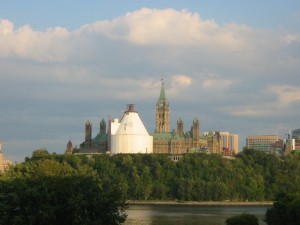
09.02.2005-parliament-from-gatineau-300x225I wish I were writing to you under better circumstances, and not when you are at such a low point in your history, so badly abused by the Harper Government. I can’t even say by the “Government of Canada”; that name has been stolen from you, replaced with that of the man who has taken you hostage.

Some would argue that because he was elected as prime minister, Stephen Harper can do what he wants with you. And if his regime wants to rewrite history, suppress science, reject reason, present lies as truth and war as peace, drag you back into the Dark Ages – to change you so much and in so many ways that you are no longer recognizable (as he threatened to do back in 2006) – that reflects the will of the Canadian people that elected the Conservatives.

But, I would argue, dear Canada, that this isn’t so.

Read more