

This article was first published by the Halifax Examiner on December 27, 2024.
It’s a bone-chilling morning near the top of Nuttby Mountain in the Cobequid Hills of northern Nova Scotia. About a dozen people have assembled for a late autumn walk in the woods, or more specifically, for lessons in forest health and human health on the lovely piece of woodland that belongs to their host and guide, David Heatley.
Before heading into the forest, the group gathers around a small campfire, and they exchange thoughts on the toll that post tropical storm Fiona took on this landscape two years ago. The wind-thrown trees are still evident all over these hills.
Heatley speaks about the losses of special forest places, and how these can cause grief. But, he adds philosophically, this is also the life and death cycle in the forest, which never ends.
And with that, Heatley leads the group into the 34 acres of woods he stewards. He takes them to what he calls his “special place,” and starts to list its many sensory gifts.
So begins the lesson on “forest bathing.”
Forest bathing is a concept recognized decades ago in Japan, and while it has many meanings and applications, in short, it is “the simple and therapeutic act of spending time in a forest.”
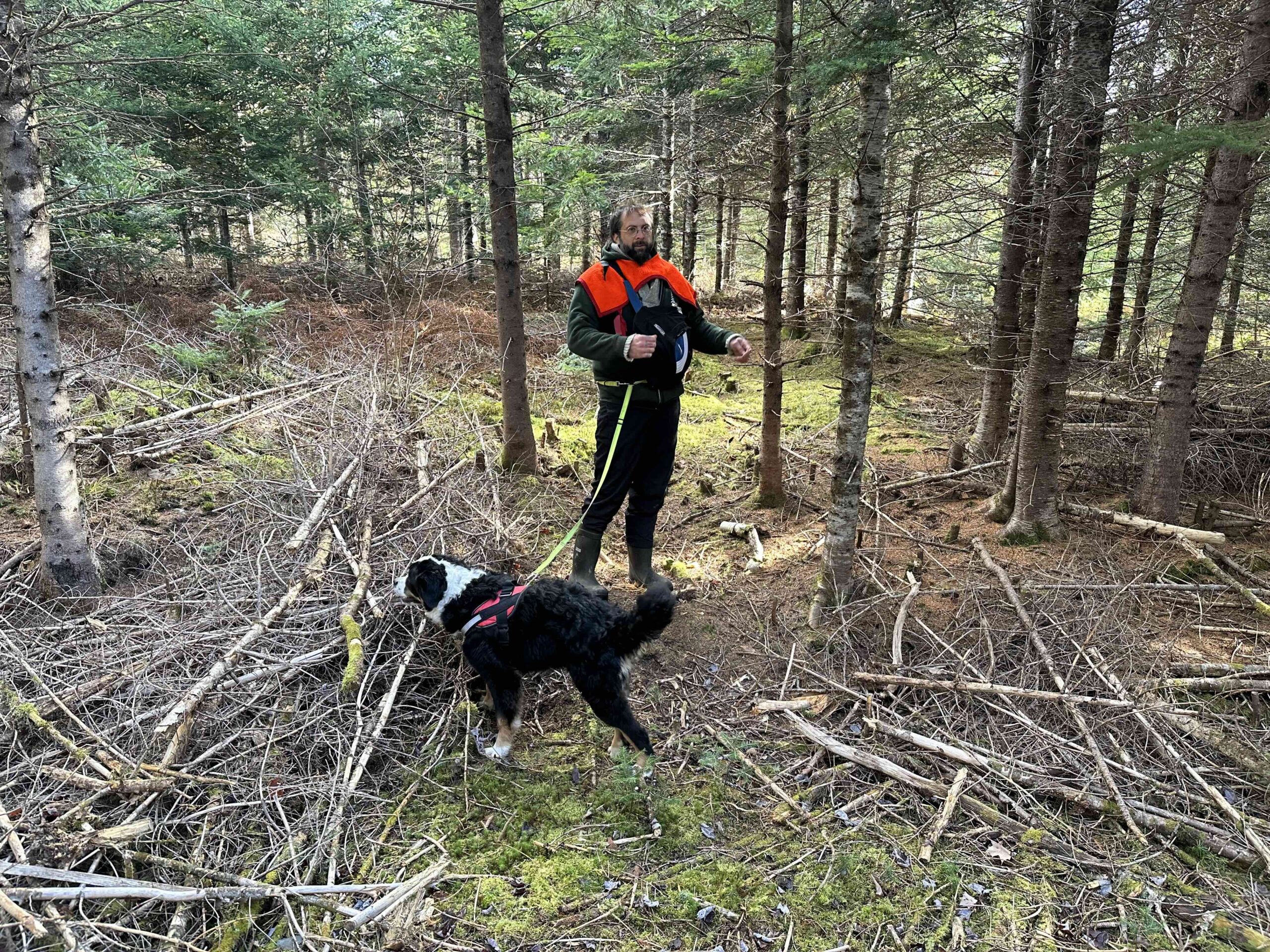
David Heatley, with his dog Tsuga (Latin name for western hemlock), explaining the concepts of forest bathing in December 2024. (Credit: Joan Baxter)
Heatley, who is the field and project development professional with North Nova Forest Owners Co-op, draws the group’s attention to the dappled sunlight filtered through the lacy canopy overhead, to the gentle murmur of the breeze in the trees, and the scent of the balsam fir, the resin of which he uses to make salves to treat insect bites and rashes.[1]
Where a tall spruce tree has toppled over, Heatley points to the new protected spot in the lee of the massive upended root system, and the tiny new trees poking through the earth and leaf litter there. By felling the tree, nature has created a small incubator for new ones in this diverse Wabanaki – Acadian forest.
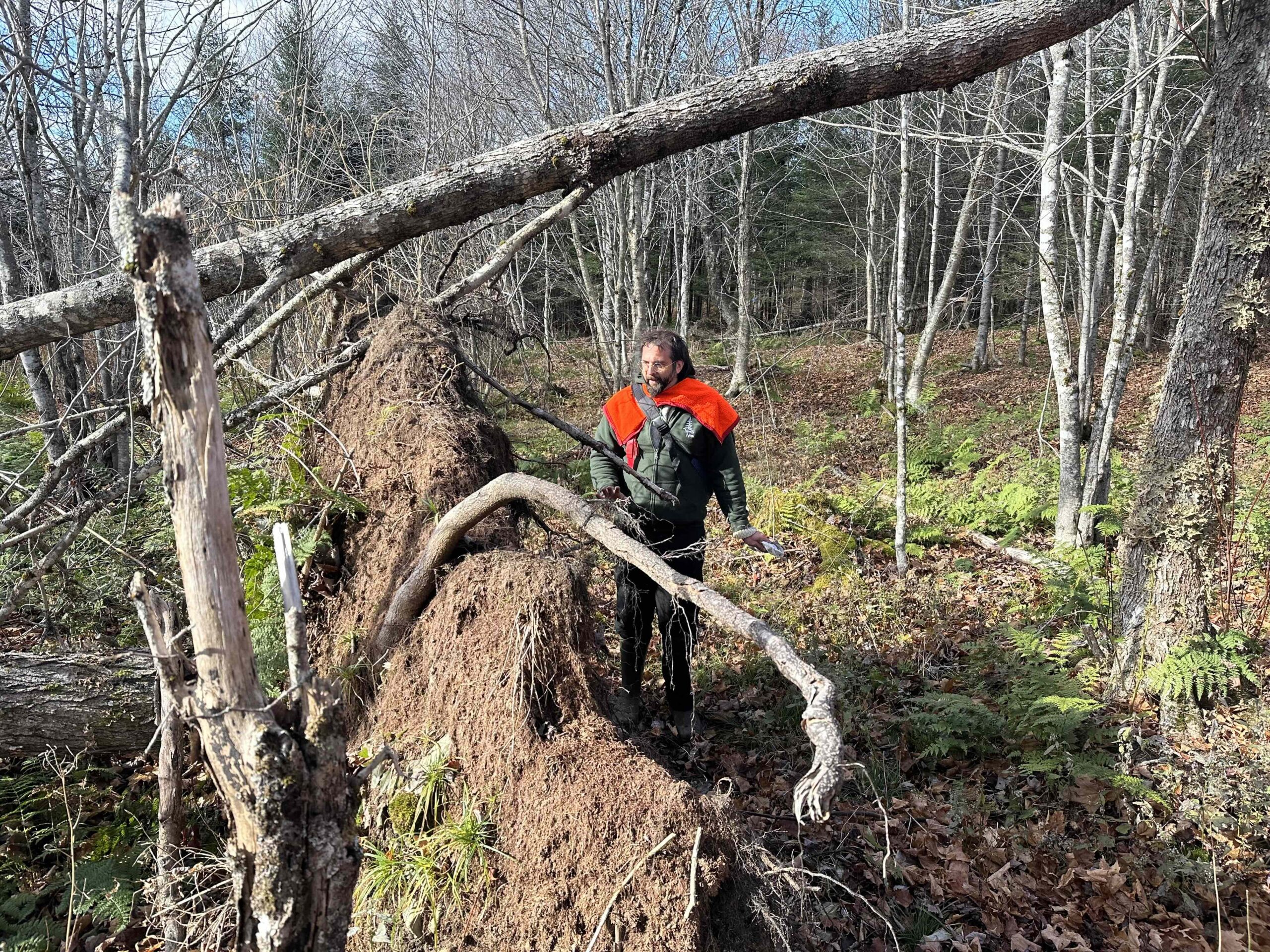
David Heatley, leading a forest bathing walk in December 2024, explains that a toppled tree root system creates a sheltered microclimate that promotes the growth of seedlings, in the endless life and death cycle of a forest. (Credit: Joan Baxter)
‘It seems magical’
Heatley grew up on Nova Scotia’s Eastern Shore, and has also spent time in British Columbia. Then, eight years ago, he joined North Nova Forest Owners Co-op. He says he appreciates their ecological philosophy about forest management.
Now that he’s learning more about forest bathing, also called silvotherapy, Heatley realizes it is something he’s been doing his whole life.
The more he learns about the volatile organic compounds, the terpenes that comprise the phytoncides exuded by plants and how many of them have medicinal properties, the more Heatley appreciates the positive effects the forest has always had on him.
“It’s a no-brainer to me that we can walk through these beautiful serene lands that have naturally occurring medicines and beneficial properties to us, and be able to breathe them in and feel better,” Heatley says. “It seems magical, although it’s incredibly bound up in the science of how these trees work.”
Restoring human and forest health
One of Heatley’s roles with the Co-op is to identify and develop non-timber forest products. Among them are mushrooms, medicinal herbs, resins from which salves can be made, and seeds or seedlings from the forest for others to plant, including as legacy trees that can be planted in honour of lost loved ones.
But, Heatley says, there are also other non-extractive uses of forests to promote a “harmonious interaction between our forests and ourselves.” And that includes forest bathing to improve human health, and also measures to improve forest health.
“Some of that can be taking out some wood here and there,” Heatley says.
Some of it’s going to be maintaining and restoring forests and stands. If it’s wetland, or other areas that are old fields that have been entirely depleted after two centuries of farming or intermediate forestry practices along the way, these lands need to be kind of guided in directions to re-establish their ecologies. Not just what species grow there or how much timber you can grow there, but the entire ecology needs to be reassessed and [we need to] do what we can to help it along.
“It’s a cultural shift towards trying to reconnect to nature and our ecosystems, when there’s been a disconnect for a number of decades now,” Heatley says. “Sometimes, especially with our connection to technology and a lack of connection to nature, we lose sight of how minuscule we are in our environment and on the planet. And gaining some perspective that is larger than us is humbling.”
Even if modern living has caused people to lose contact with nature, Heatley notes that Indigenous groups had profound knowledge of all the flora and fauna around them, and put them to use without causing harm. They used “tinder fungus” or chaga, for example, as a medicine and also a way of carrying fire from one spot to another.

Chaga, a parasitic fungus that grows frequently on birch trees, emits a pleasant odor when burned, and its embers have been traditionally used to transport fire. Photo taken during a forest bathing walk with David Heatley in December 2024. (Credit: Joan Baxter)
Christmas trees a kind of forest bathing
Heatley has been experimenting himself with resins and the chemicals released by different trees.
“Some are anti-inflammatory and you can feel the effects in your nasal system as soon as you breathe them in,” he says. “They’re very similar to a menthol effect.”
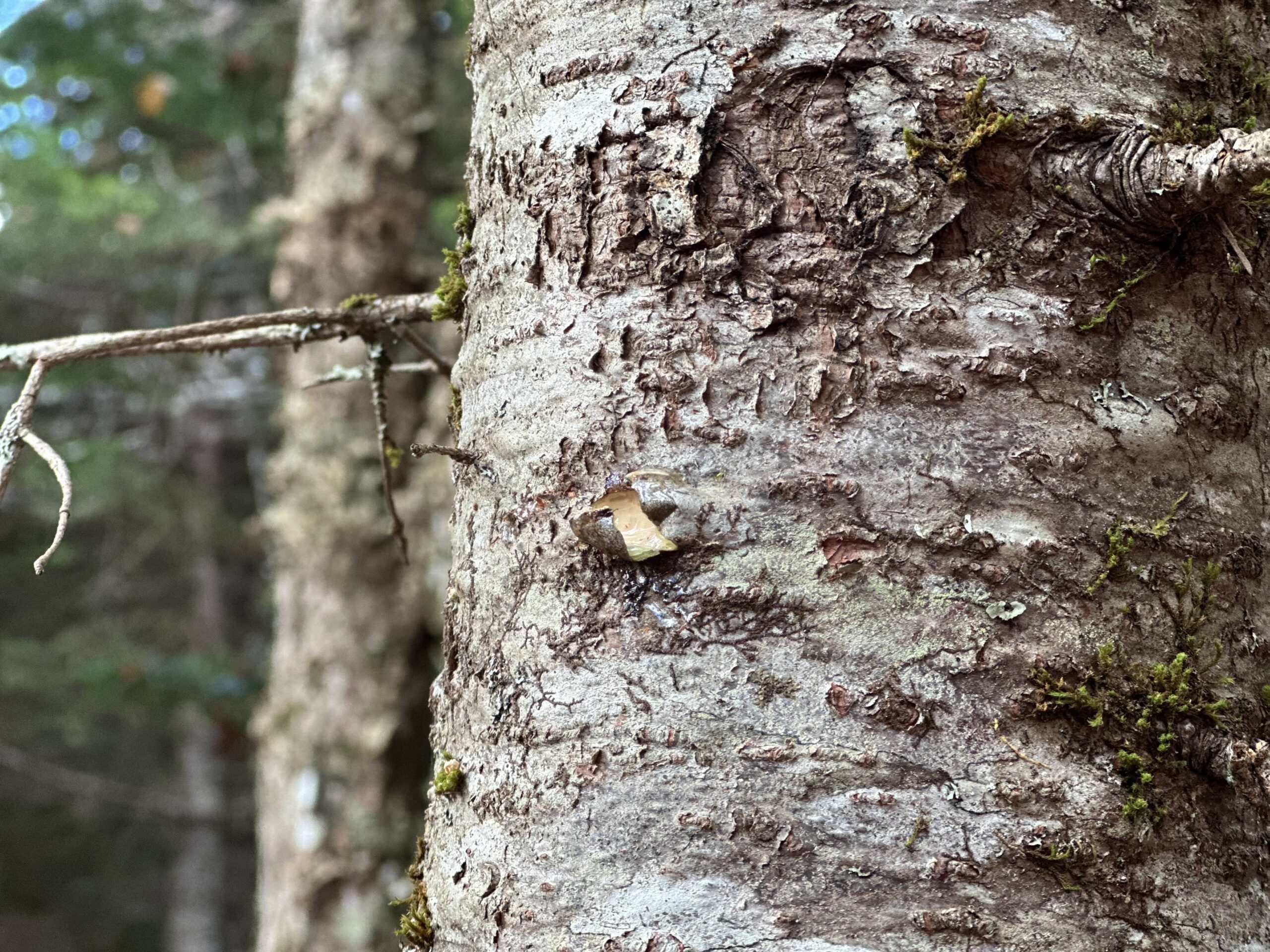
Balsam fir blister emits a fragrant menthol-like resin that can be used in salves. This photo was taken in December 2024, during a forest bathing walk with David Heatley. (Credit: Joan Baxter)
“They’re so prevalent in balsam fir that the Christmas tree is a perfect example to me of very old forest bathing that we bring into our house,” Heatley says. “It makes the house smell wonderful, and it’s a relaxing, celebratory time of year for a lot of people. And traditional practices in Japan allude to bringing cherry blossoms inside because they have the same air purifying and antiseptic properties in the air.”
Although forest bathing and silvotherapy practices can be traced back to antiquity, Japan is where forest bathing really got its start as a formal wellness science.
Japan led the way
In 1982, Tomohide Akiyama, the director of Japan’s Ministry of Agriculture, Forestry and Fisheries coined the term “shinrin-yoku” to recognize forest bathing as a therapeutic method, following studies showing the beneficial effects of compounds in the forests known as phytoncides.
According to Florence Williams’ 2017 book, ‘The Nature Fix,’ shinrin-yoku is based on ancient practices to “let nature into your body through all fives senses.” Williams describes a tour she took of one of Japan’s 48 official therapy trails the country’s forestry agency designated for shinrin-yoku. She explains that the concept emerged as part of the Japanese government’s effort to find “non-extractive ways to use forests, which cover 68% of the country’s landmass.”
Japan has also invested millions of dollars in research, and plans to designate 100 forest therapy sites within 10 years. Williams writes:
Visitors here are routinely hauled off to a cabin to stick their arms in blood pressure machines, part of an effort to provide ever more data for the project. In addition to its government-funded studies and dozens of special trails, a small number of physicians in Japan have been certified in forest medicine.
Prescribing nature
As the Halifax Examiner reported, since 2022 health care providers in the Maritimes have been able to – literally – prescribe nature to their patients as part of the parks prescription (PaRx) program.
Related: Get outside: national nature prescription program launches in the Maritimes
The program was started by the BC Parks Foundation in 2018, as part of its Healthy By Nature push. It offers basic guidelines for licensed health care providers who want to prescribe nature to improve their patients’ lives and health. They are advised to write out actual prescriptions, encouraging patients to spend at least two hours a week in nature, for minimum periods of 20 minutes at a time.
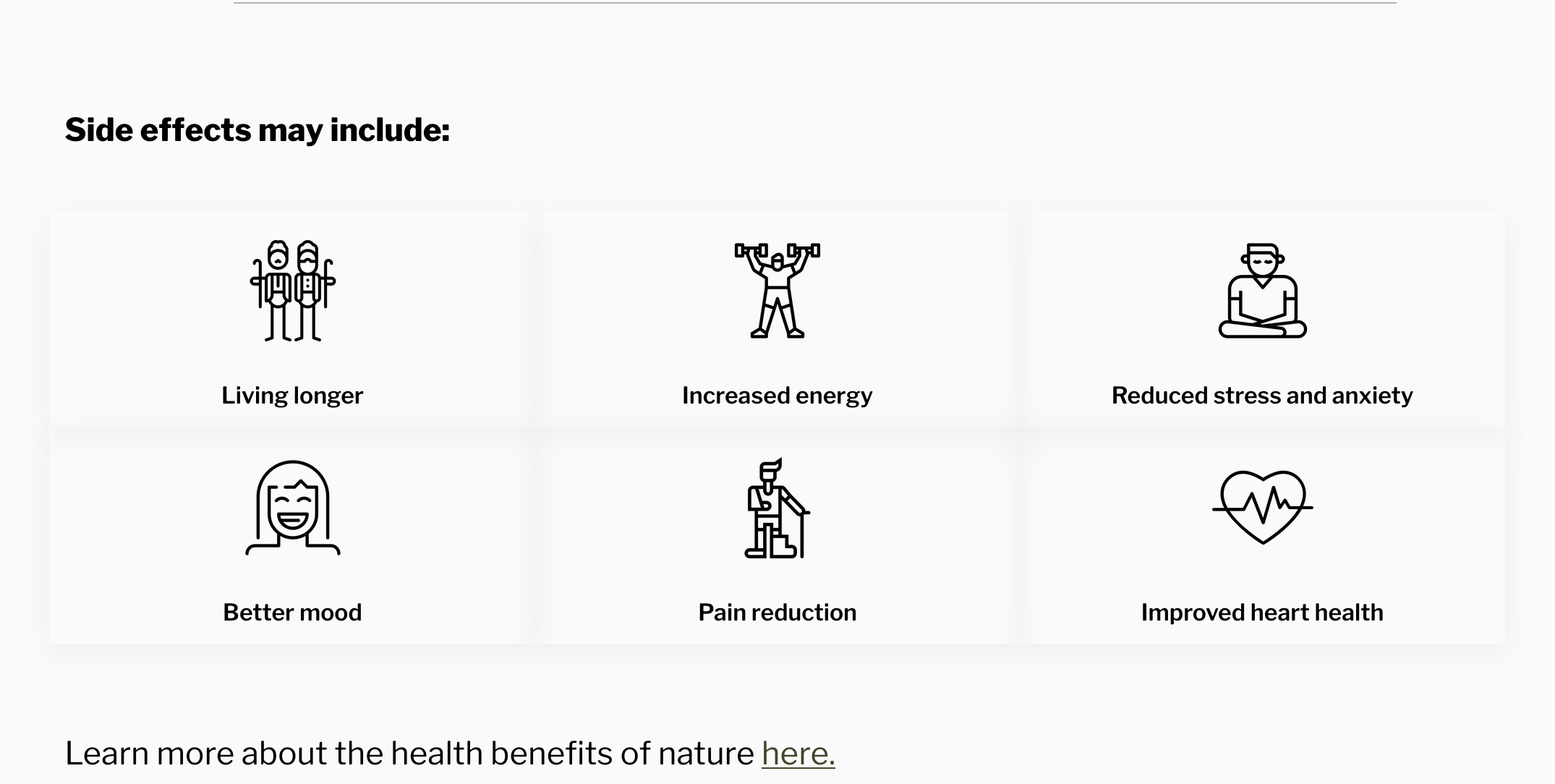
The BC Parks Foundation lists the “side effects” of the PaRx park prescriptions. Screenshot taken December 2024 from website: https://www.parkprescriptions.ca/
Jennie McCaffrey, vice president of health and education at BC Parks Foundation, says that while research clearly shows there are health benefits of nature experiences, those experiences vary for everyone.
“For me, I could be gardening in my front yard,” McCaffrey tells me in a telephone interview from British Columbia. “I’m incredibly privileged to have a front yard and a garden.”
“I don’t need to be backpacking for three days in the wilderness to receive those health benefits,” she says. “For a lot of people in Canada, if you’re able to walk to your local park where there are trees and shrubs and bushes, it’s possible to have really meaningful nature experiences in urban areas.”
“We need more of those spaces,” McCaffrey adds, and then explains:
Something we’re doing at the [BC Parks] Foundation to combine our health and education focus is transform school grounds across the country into 30% nature space to contribute not only to helping Canada reach its 30 by 30 goals [to protect 30% of Canada’s land and water by 2030], but also to improve the mental and physical health of students, teachers, communities.
“The research shows us that learning in nature makes kids smarter, healthier, happier, all of these wonderful, wonderful outcomes,” McCaffrey says.
“We found that the evidence base is the best way to communicate to physicians and other health care providers how important nature can be for human health,” she adds. “I think we do get – or have in the past maybe had – some eye rolls, but once the evidence is in front of them, it’s really hard to deny the incredible impact of nature on human health.”
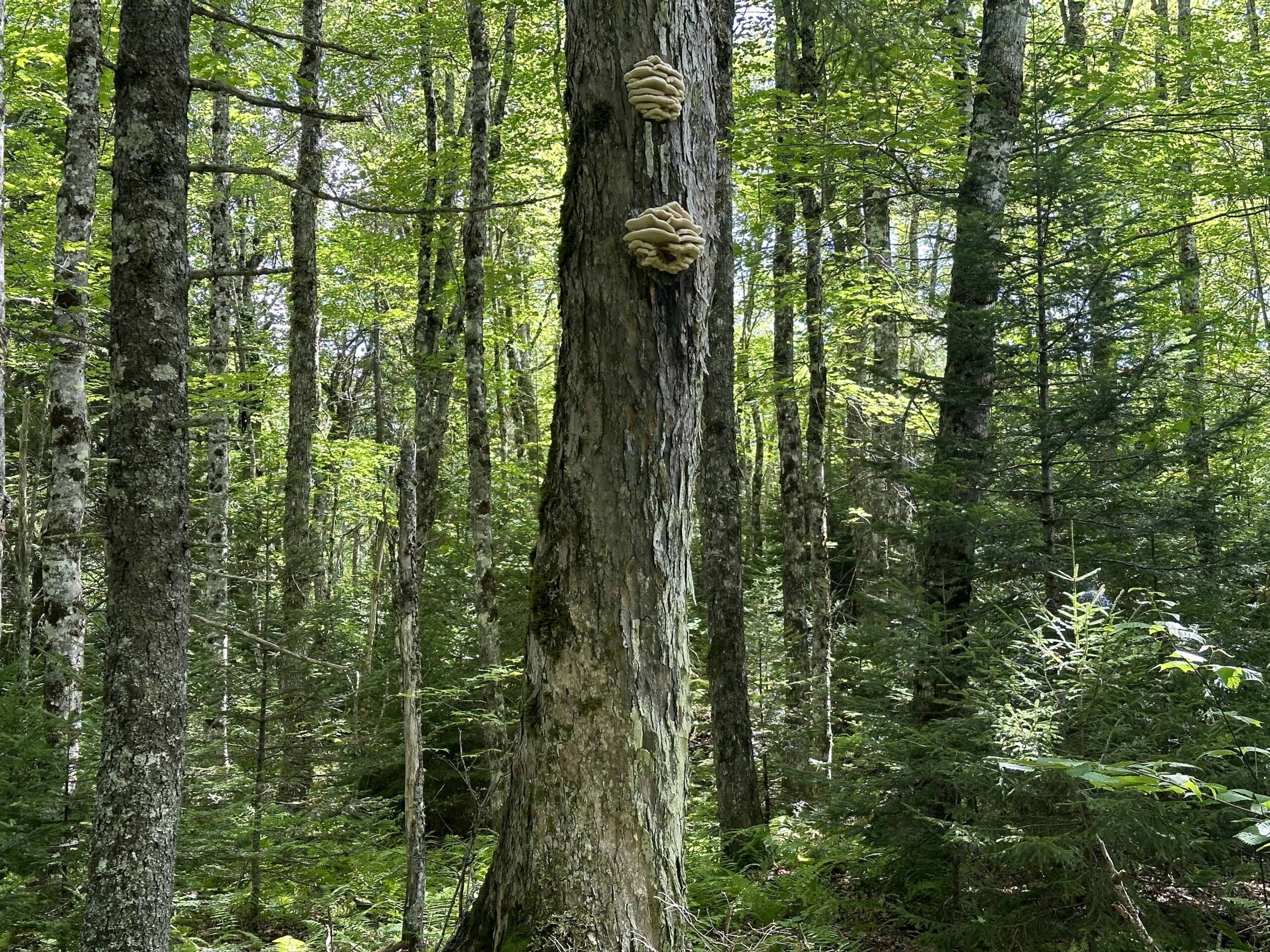
Old growth forest near Goldsmith Lake, Annapolis County, Nova Scotia, where citizen scientists have been finding many species at risk, and trying to convince the Nova Scotia government not to permit logging, and to declare the area a protected wilderness area. This photo was taken in August 2024. (Credit: Joan Baxter)
A million nature prescriptions
In September 2024, PaRx celebrated one million prescriptions, and 15,000 health care providers prescribing nature.
McCaffrey says Canada is the only country where such a program has been endorsed by a national medical association, and one of only a few where health care providers can prescribe nature.
“We were thrilled in 2022 to be endorsed by the Canadian Medical Association,” McCaffrey says.
Parks Canada is also part of the program, providing a free pass to people with a nature prescription.
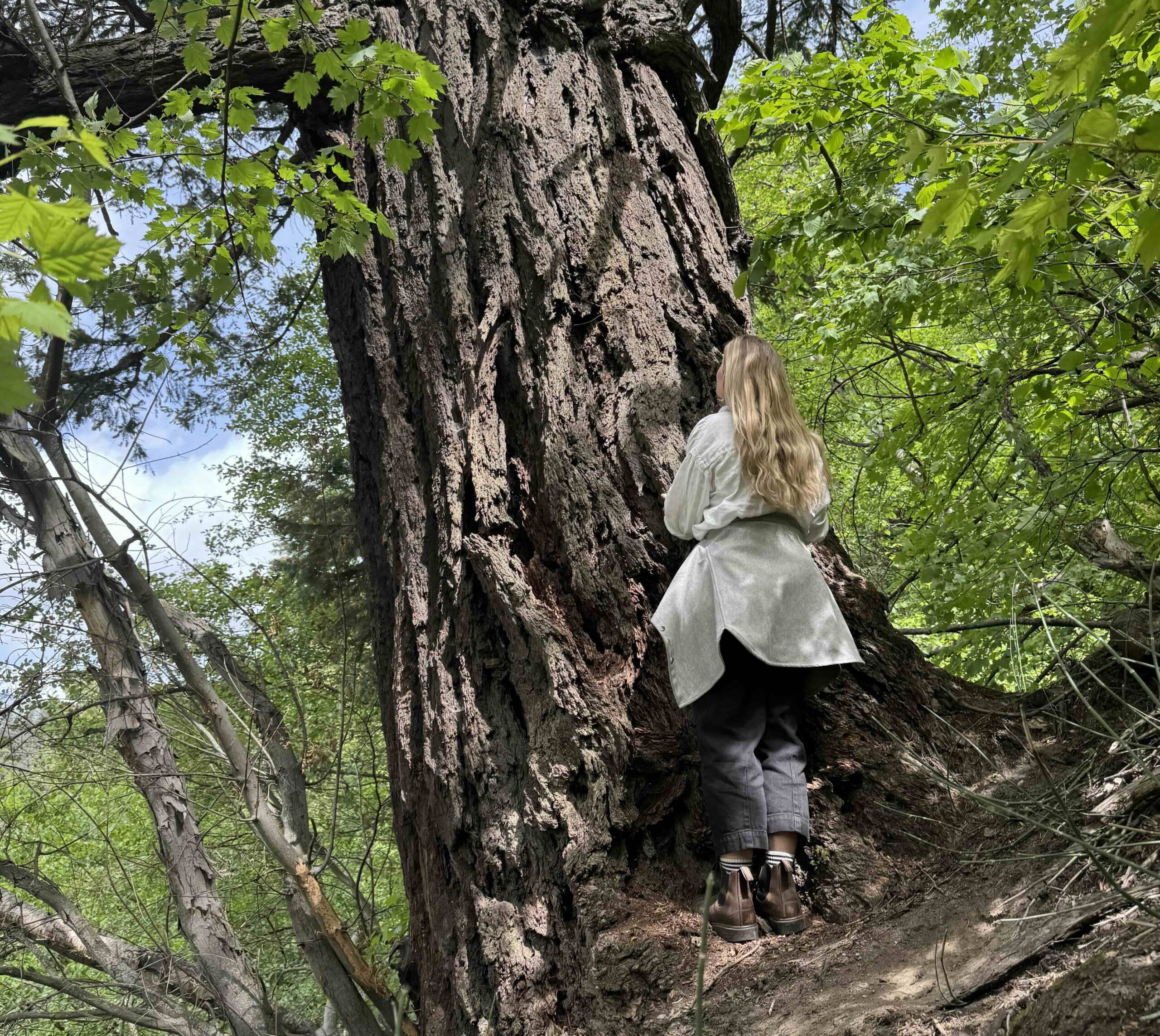
Jenny McCaffrey of the BC Parks Foundation, which started the PaRx parks prescription program. (contributed)
“We are very fortunate in most places in Canada to have free access to nature, but in many cases, it’s really challenging to reach those spaces,” says McCaffrey.
For this reason, she says the PaRx program is working to reduce barriers to high-quality nature-based experiences, with transportation providers, car share programs, and transit to create routes around accessing parks, something she hopes to look at with partners in Nova Scotia.
PaRx partners and supporters in Nova Scotia include the Association of Psychologists of Nova Scotia, Annapolis Community Health Board, Kingston / Greenwood Community Health Board, Nova Scotia College of Family Physicians, Pharmacy Association of Nova Scotia, and Dalhousie University Faculty of Medicine.
Prescribing Parks Canada passes
In an email, a Parks Canada spokesperson tells me that in 2022, Parks Canada provided about 4,000 adult discovery passes to PaRx.
In Nova Scotia, both Kejimkujik and Cape Breton Highlands National Parks can be accessed for free with a prescription.
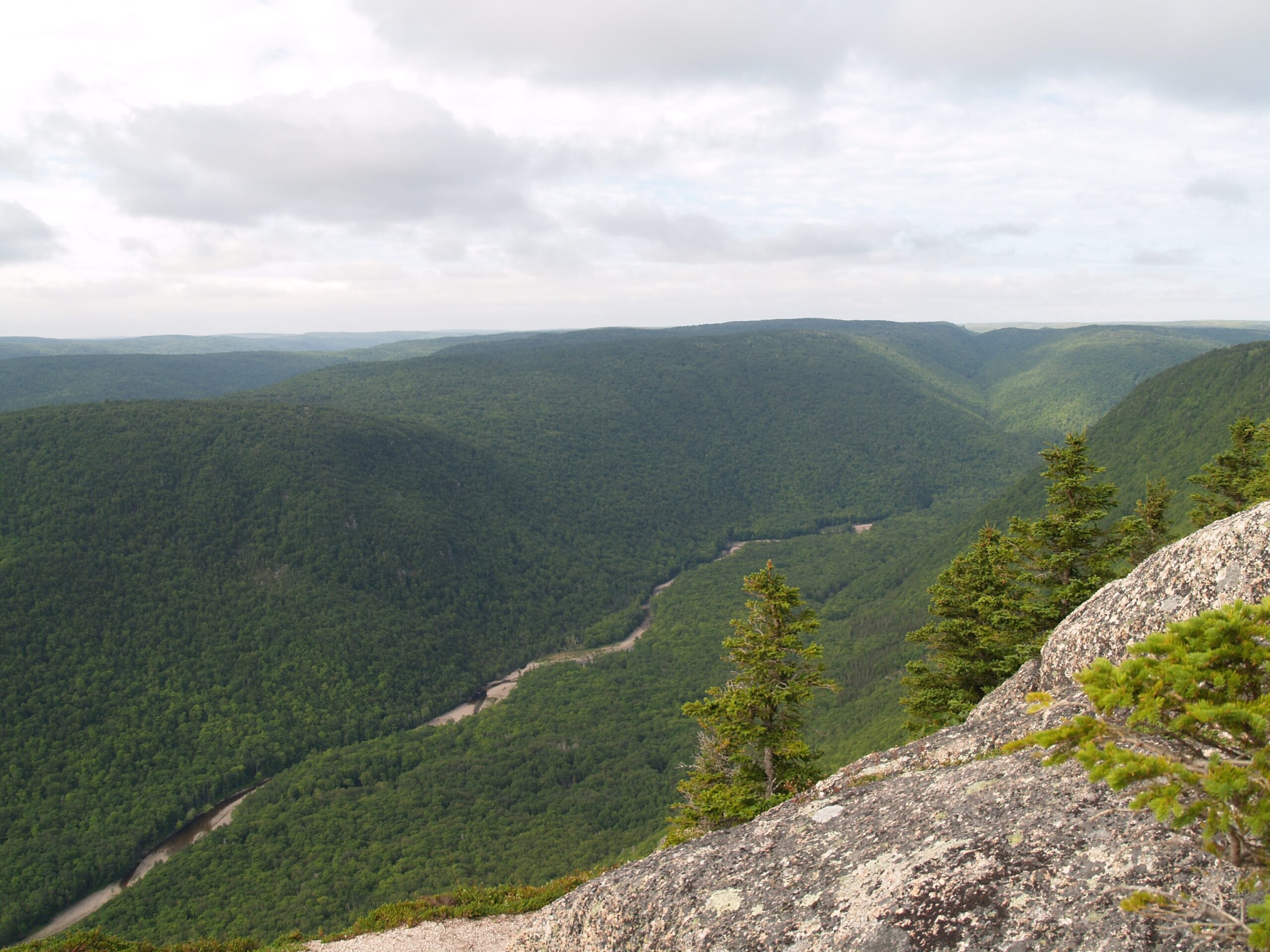
Cape Breton Highlands National Park is one of two national parks in Nova Scotia for which healthcare providers can prescribe a free PaRx pass. (Credit: Joan Baxter)
Nova Scotia provincial parks have free admission, but of course getting to parks can still be a challenge for many.
A spokesperson from the Nova Scotia Department of Health and Wellness wrote in an email that:
Healthcare providers are certainly able to encourage their clients to spend time in nature. There is nothing that precludes physicians in Nova Scotia from prescribing activities in nature, if they deem it beneficial for the patient. Time in nature is a well-established practice for promoting health and wellness.
None of this is news to Dr. Laurette Geldenhuys or Dr. Shannon Johnson in Halifax, both enthusiastic advocates for forest bathing and the PaRx program. They recently conducted a study of the health impacts of nature at Sandy Lake Regional Park.
Forest bathing at Sandy Lake
In an interview, Karen McKendry, senior wilderness outreach coordinator at the Ecology Action Centre (EAC), explains how the study at Sandy Lake came about.
During the COVID pandemic, she says she received many “heartfelt emails” from people who told her they were “struggling” when trails and parks were shut down, and they couldn’t get out for the walks they needed as they recovered from cancer or surgery, and sometimes just to cope with life’s stresses. She’d learned from reading, and from doctors involved in the PaRx program, about forest bathing studies that showed the positive healing effects of nature, and thought it worthwhile doing a similar study in Halifax.
McKendry then advertised for volunteers for a forest walk and forest bathing study at Sandy Lake, and 17 people showed up. It was bright and sunny on Oct. 27, 2024, a perfect day to enjoy the beauty of the park’s biodiverse forests, she recalls.
“Sandy Lake Regional Park is the second largest park in Halifax Regional Municipality at over 1,000 acres and we saw only a tiny corner of it,” McKendry says.
But using a network of unmarked trails, they walked through diverse forest types – some dominated by hemlock and red spruce, others by sugar maple and yellow birch – and even some patches of old growth forest, stopping to admire Sandy Lake and Marsh Lake.
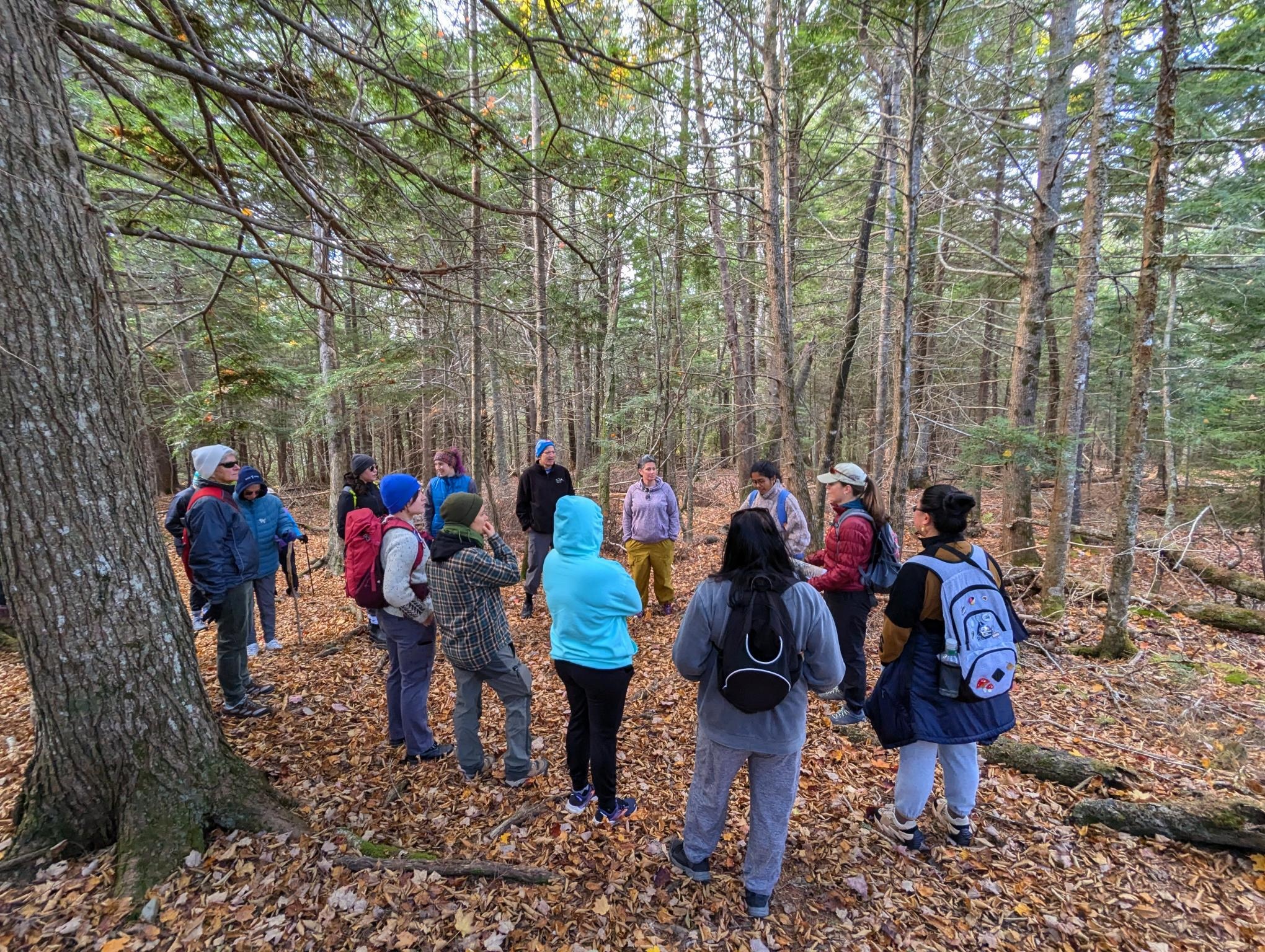
Karen McKendry (red jacket and cap) of the Ecology Action Centre leading a forest walk in Sandy Lake Regional Park, Halifax Regional Municipality, Nova Scotia. (Credit: Sybil Nunn)
It is an extraordinarily biodiverse park, McKendry says, with only one “sad point looking out at glorious Sandy Lake to the other side where cutting has happened and could happen again because of the threat of a big suburban sprawl housing development.”
She is referring to the “special planning area” owned by Clayton Developments, part of the Shaw Group. Clayton has plans for a large residential development project on the lake, which has been greenlit by the provincial government of Premier Tim Houston, and is opposed by groups concerned about the health of the forest and lakes in the area.
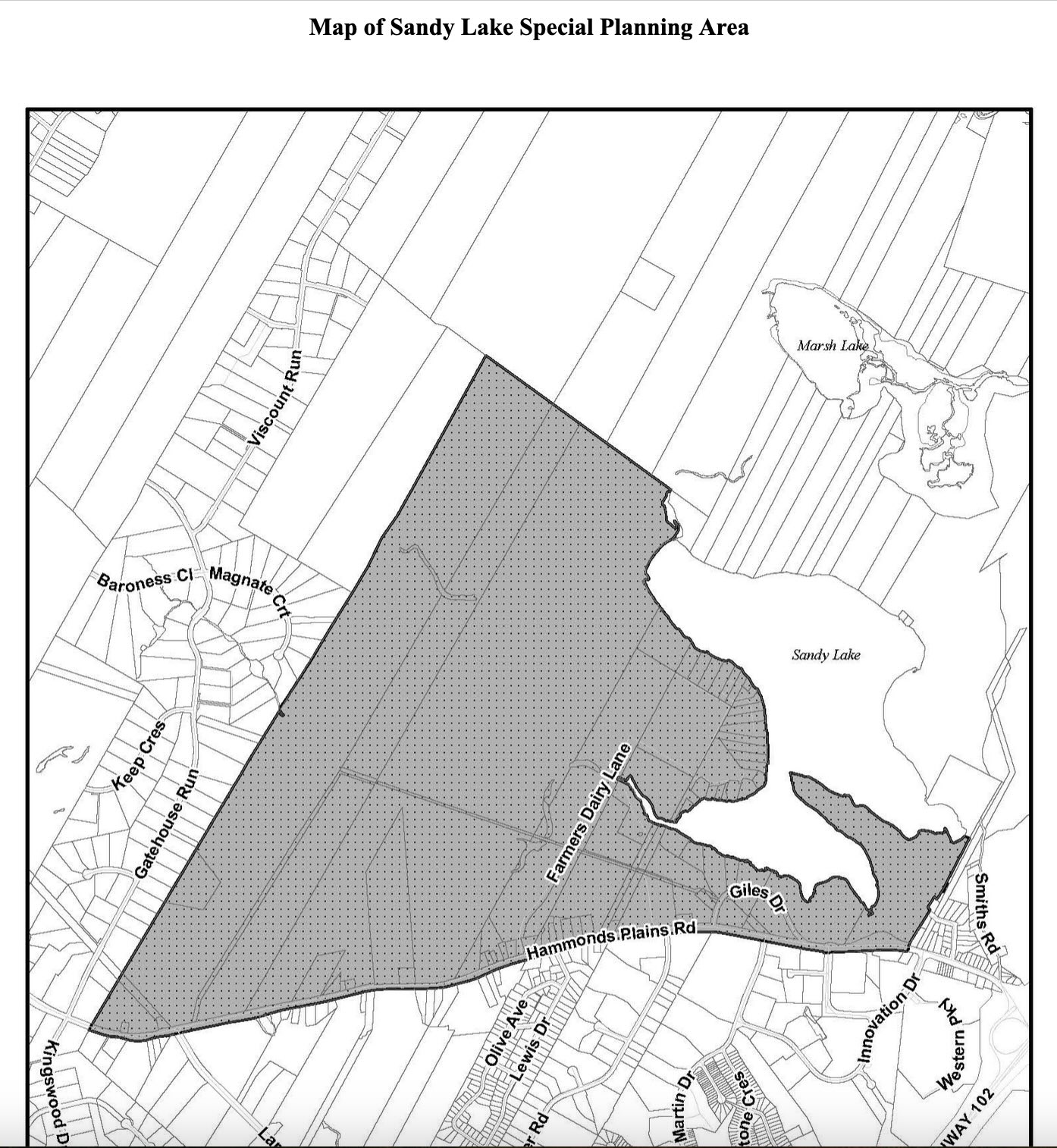
The provincial government of Premier Tim Houston has slated a large area around Sandy Lake as a “Special Planning Area” for Clayton Developments large residential project. On its map, the government doesn’t even show the presence of Sandy Lake Regional Park on the other side of the lake.
Related: Fast-tracking Port Wallace development threatens Lake Charles and health of future residents
First, the stress tests
But before the volunteers headed out, they gathered in the parking lot and filled out a psychological “vitality” test to gauge their moods and feelings of well-being, coordinated by Dr. Shannon Johnson, a clinical psychologist and faculty member in the Department of Psychology and Neuroscience at Dalhousie University.
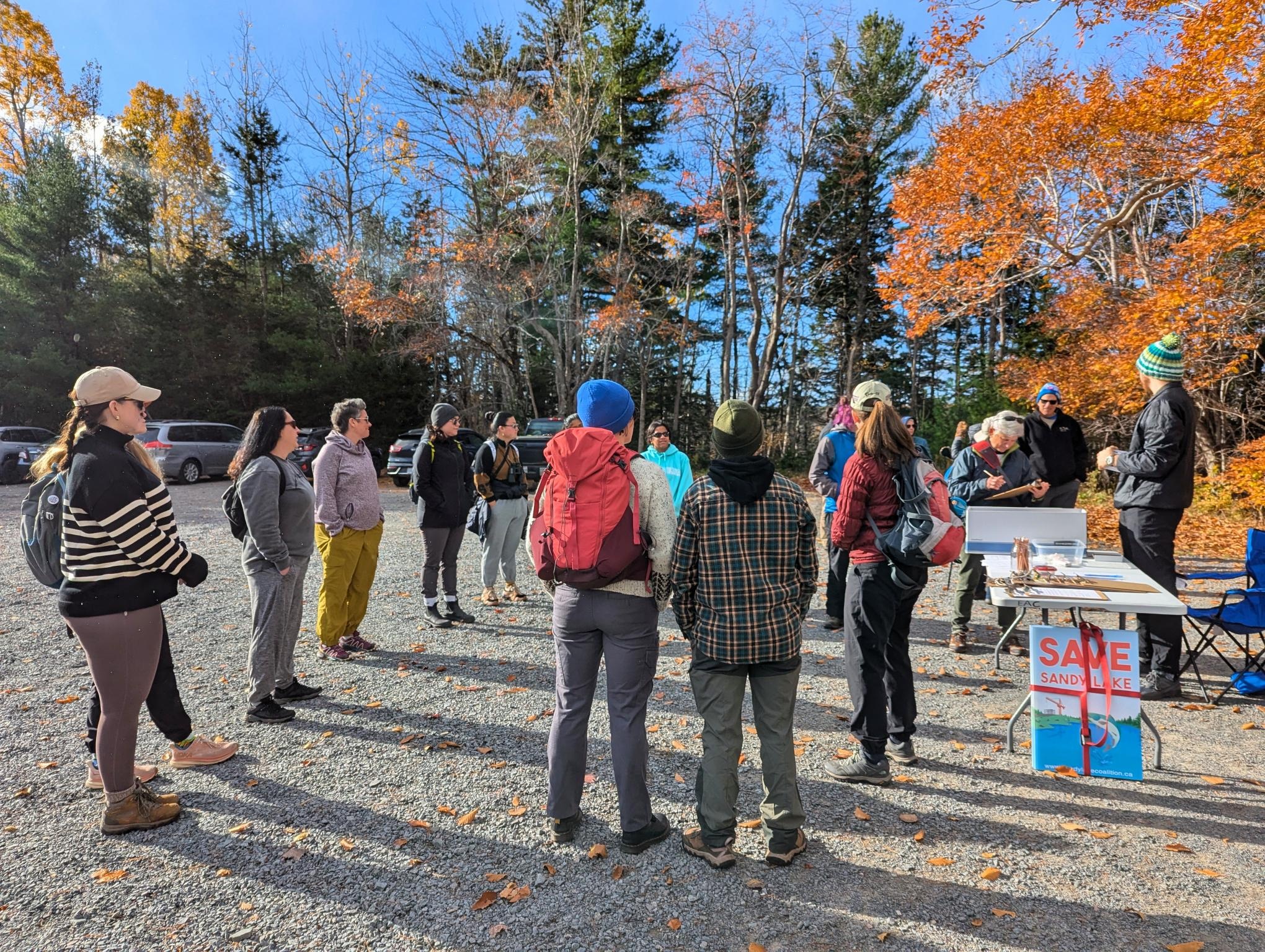
Assembling at Sandy Lake for their October 2024 forest walk, and filling out psychological “vitality” test forms and to have their saliva collected in test tubes to measure cortisol levels. (Credit: Sybil Nunn)
The volunteers also lined up while Dr. Laurette Geldenhuys took samples to measure the level of stress hormone, cortisol, in their saliva. Geldenhuys is a nephropathologist in the Department of Pathology at Dalhousie University, who handles nearly all the diagnoses of kidney biopsies for Atlantic Canada. She is also on the boards of EAC and the Canadian Association of Physicians for the Environment (CAPE).
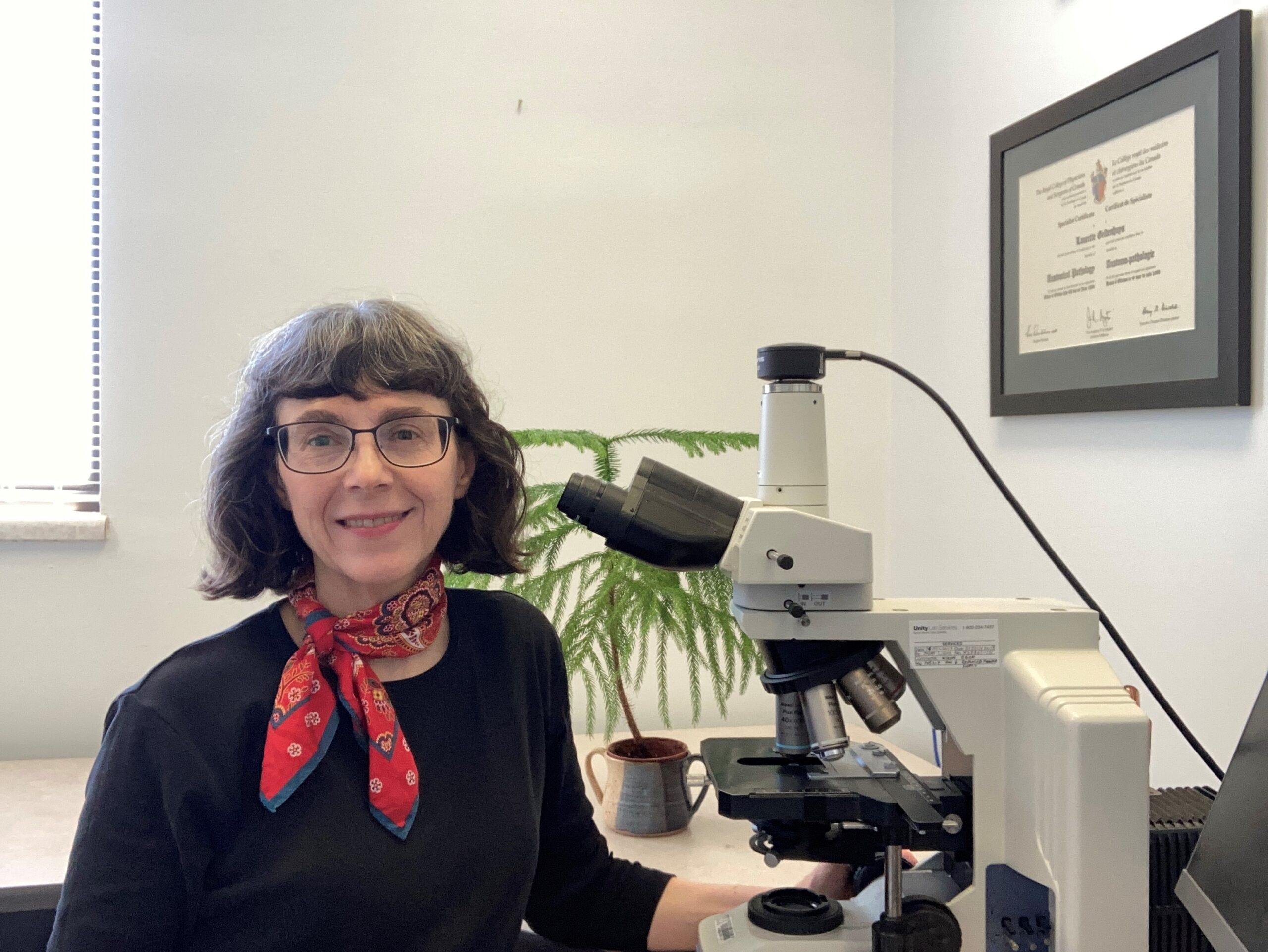
Dr. Laurette Geldenhuys. (contributed)
Geldenhuys says that after a one-hour guided walk in the Sandy Lake urban wilderness area, the results were exciting, showing “a statistically significant decrease is cortisol, increase in vitality and positive feelings, and decrease in negative feelings.”
They intend to publish their findings in a scientific journal, she says.
Science shows health benefits of nature
Geldenhuys says there is a growing body of scientific literature and studies showing the health benefits of forest bathing:
It improves heart health and lung health. Overall it decreases the likelihood of developing cancer, and people who do have cancer respond better to the cancer treatment if they also spend time in nature. It decreases stress and this results in a decrease in cortisol.
“Spending time in nature is also as good as drugs for moderate anxiety and depression,” Geldenhuys says. “It can also improve moderate attention deficit hyperactivity disorder comparable to drugs in children.” However, she stipulates that this is not the case for severe anxiety and depression, which require medication and other interventions.
Geldenhuys says diabetes is “causing an absolute epidemic of kidney disease.”
But even there, nature can play a role, she says, citing a new research paper that links the rising global incidence of kidney disease with the impacts of climate change and a range of environmental factors including heat stress, urbanization, and air pollution. The article states that “the presence of greenery in outdoor and residential facilities” reduces the risks of many serious health problems, including protecting “against new-onset chronic kidney disease.”
Rooms with a view (of trees)
Geldenhuys advocates for the “3-30-300 rule for urban forestry” developed in 2021 by Cecil Konijnendijk, an urban forestry professor at the University of British Columbia, which, she says:
…aims to provide equitable access to trees and green spaces by setting thresholds of having at least three well-established trees in view from every home, school, and workplace, number one. Number two: have no less than a 30% tree coverage in every neighbourhood … Number three: there should be no more than 300 metres to the nearest public green space from every residence.
“There are studies that show that people who live in a neighbourhood with 30% tree cover actually have less diabetes and hypertension, less psychological distress,” Geldenhuys says. “They sleep better and feel less lonely.”
And, she adds, trees in urban areas are also extremely important during the climate crisis, providing shade and reducing temperatures, absorbing carbon dioxide, and also water, to reduce flooding risks.
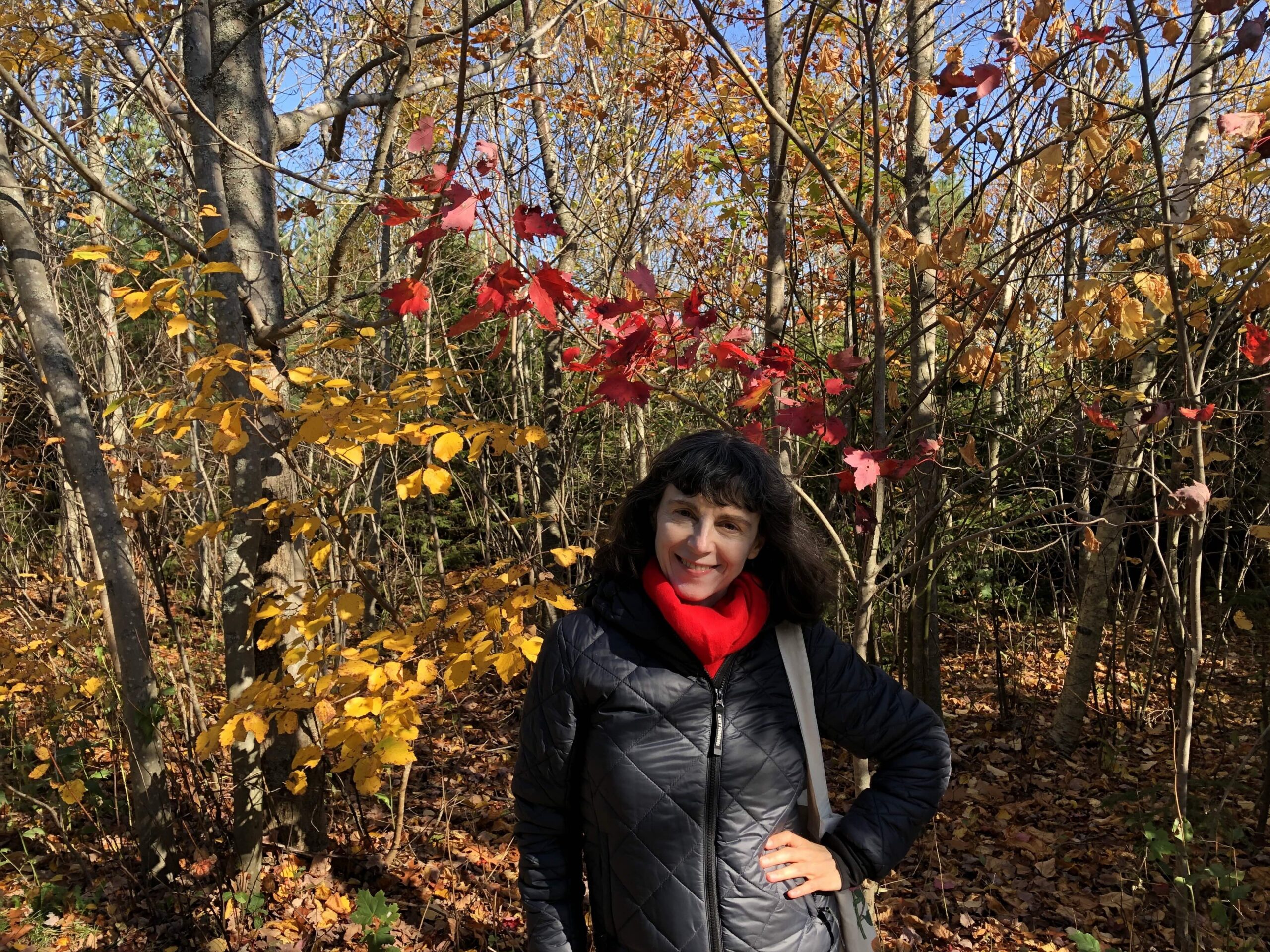
Dr. Laurette Geldenhuys in Point Pleasant Park. (Credit: Angela Dini)
Geldenhuys applauds the Canadian Coalition for Green Healthcare and its healthcare forest initiative, which encourages tree-planting and re-wilding around health care facilities.
The more time people spend in nature, Geldenhuys tells me, the more they grow to love it and advocate for policies that will protect nature.
Related: Learning ‘not to hurt’ nature: Pictou County Forest School offers a classroom amidst the trees
Good for the planet’s health too
Dr. Shannon Johnson, who was also involved in the study at Sandy Lake, agrees with Geldenhuys. “We know that people who feel more connected to nature also have stronger pro-environmental behaviours,” she says in an interview. “So this is also good for the planet if we can get people connected with nature.”
Johnson has been doing research on the benefits of nature on human wellness for more than a decade. As the Halifax Examiner reported here, she was also instrumental in launching the PaRx program in Atlantic Canada on Earth Day in 2022.
Johnson points out that there is lots of good evidence showing you can get the benefits of nature just by having and noticing trees outside your window, or noticing nature on the way to work. She says you don’t have to take a three-hour hike to get the physiological and psychological effects.
Green space with trees or forests, and blue space with waterways or the ocean, can both have positive effects on people’s health and decrease stress levels, says Johnson. It all depends on what nature activities someone enjoys, Johnson notes, and it could be something as simple as sitting in a backyard having a cup of tea.
However, she cautions, it is important to try to connect to the nature around you. “You might go to Point Pleasant Park for an hour-long walk,” Johnson says. “But if you’re on your phone the whole time, you’re not really engaged in nature the same way you would be if you were looking around and noticing what you hear and smell and see. That’s really critical.”
Johnson says there are theories about why nature can improve moods and decrease stress. But for her at this point, it doesn’t really matter precisely what mechanism made volunteers feel happier and less stressed after their walk in the Sandy Lake park. What matters is that they learned when they spend time in the woods, they feel benefits and will be drawn to do so again.
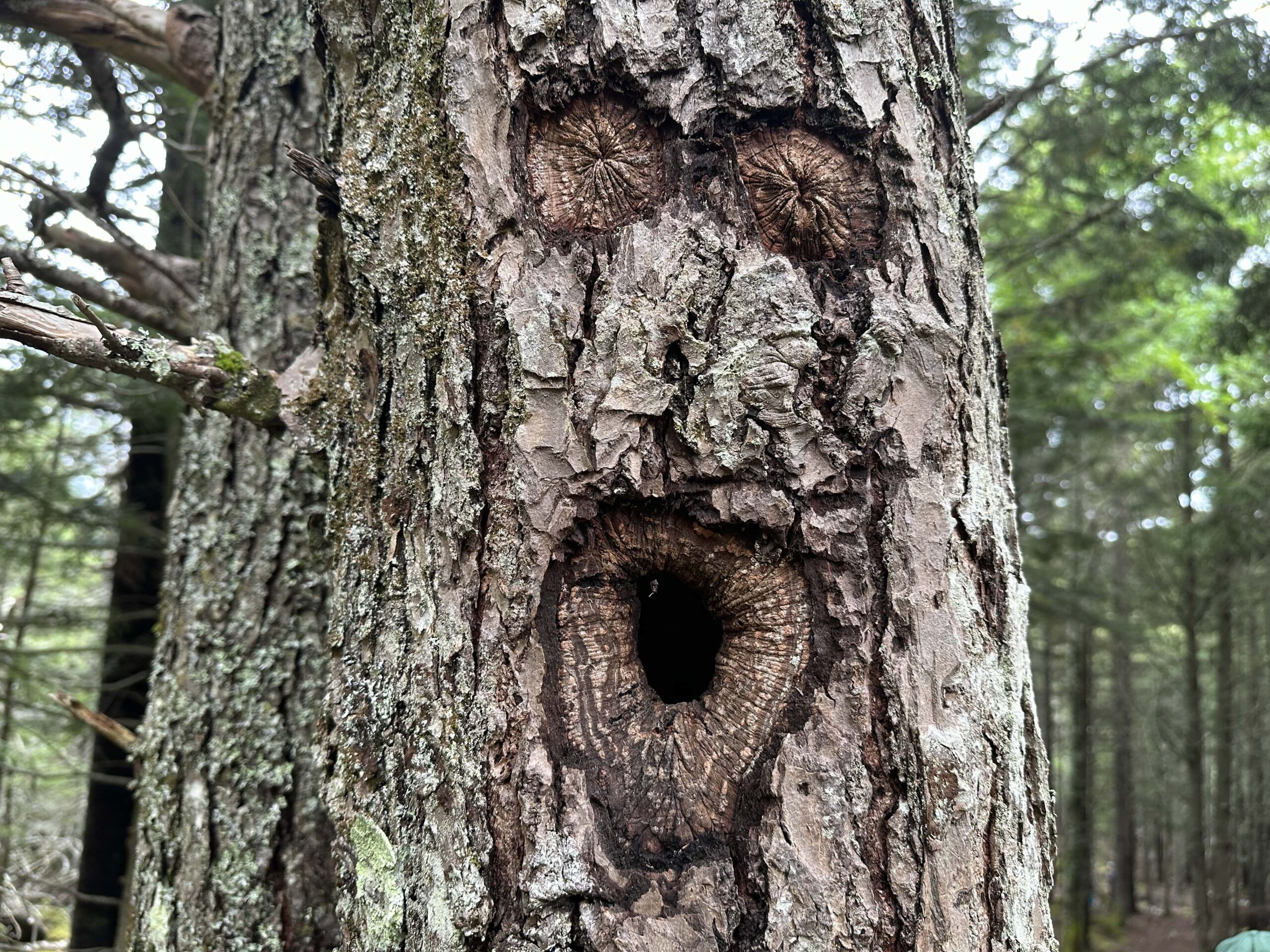
Noticing the forest is part of the “forest bathing” process; this startling tree trunk was noticed on the Wentworth Valley trail to High Head. (Credit: Joan Baxter)
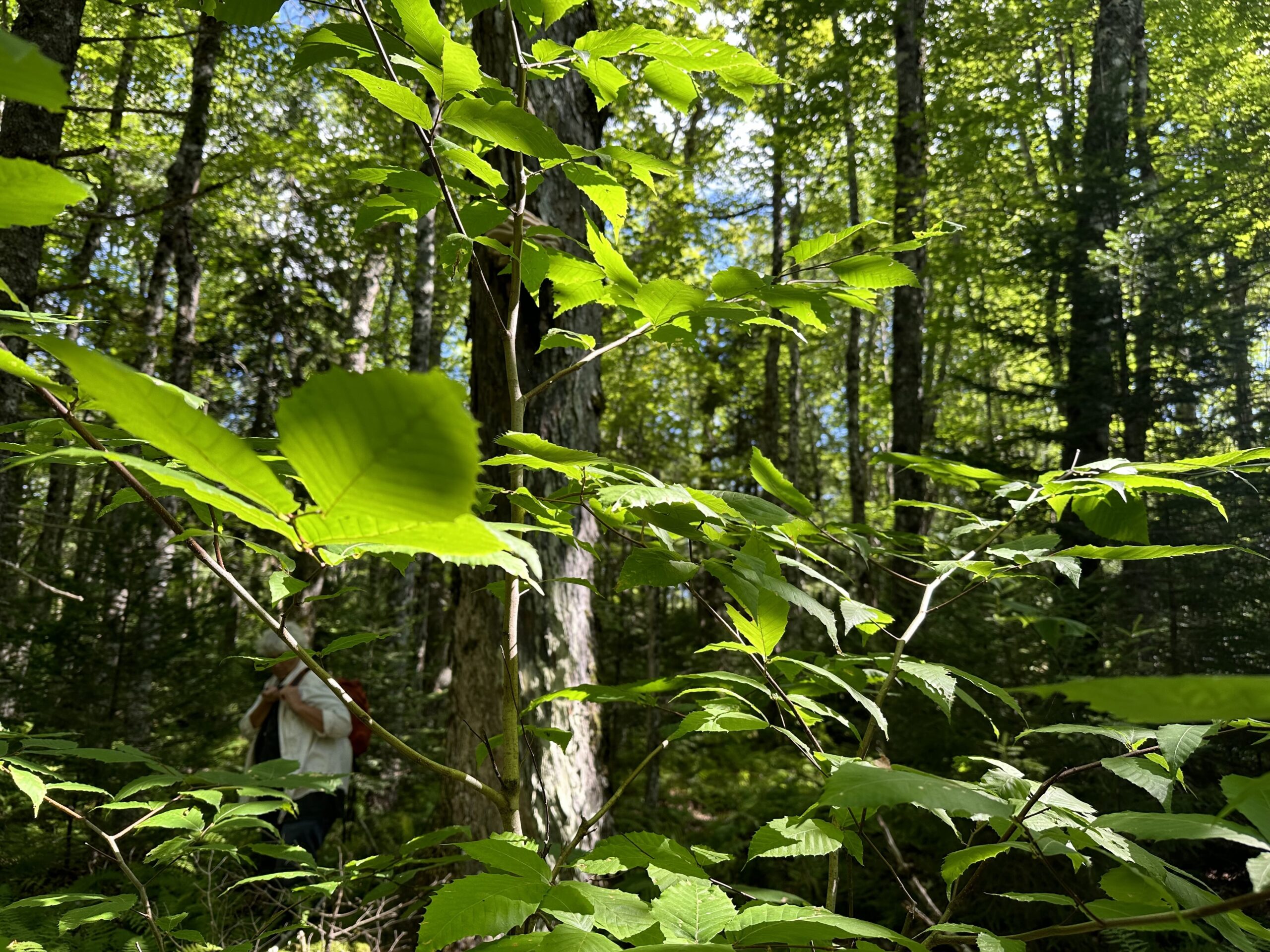
Old growth forest near Goldsmith Lake in Annapolis County, Nova Scotia, where citizen scientists like Nina Newington (visible here) have camped out and undertaken intensive research for species at risk, trying to convince the provincial government to protect the area from cutting, and declare it a protected wilderness area. This photo was taken in August 2024. (Credit: Joan Baxter)
A postscript from Heatley
A few weeks after hosting a session on forest bathing in his woods on Nuttby Mountain, and a few days after a separate interview on more of the specifics of the practice, Heatley sent me a story about his son, Alder.
We had earlier asked him if he took his son forest bathing with him. He had replied that while Alder had been in the forest with him since he was a baby on a sled, at the age of eight the woods were familiar to him, so it wasn’t very “exciting” for his son to be in the woods any more.
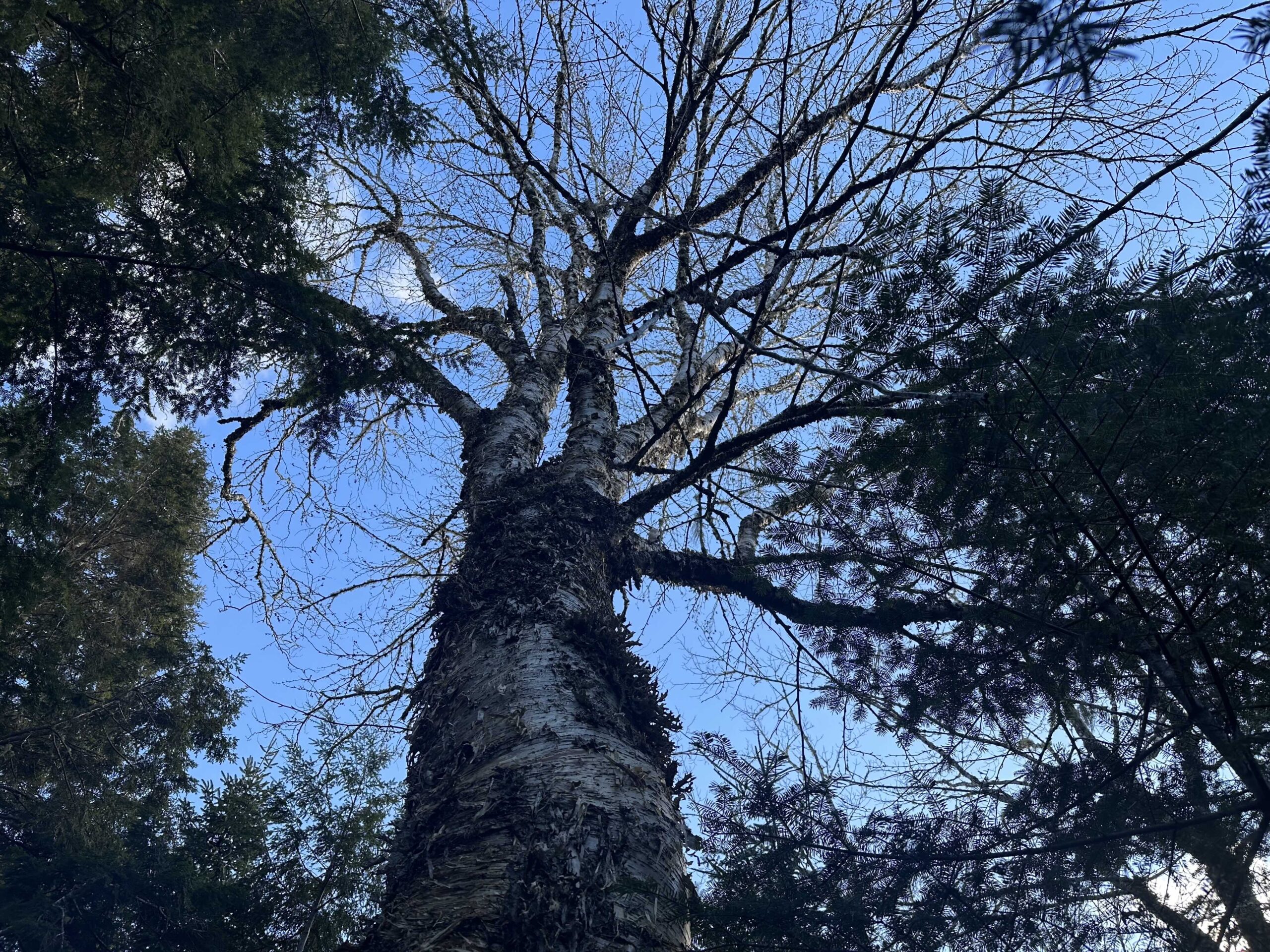
Crown of a large yellow birch tree. (Credit: Joan Baxter)
“Forest bathing usually requires some quietude,” Heatley had said. And these days, his son’s attention was turned very much to technology, so forest bathing wasn’t necessarily something that interested him.
But in his email, Heatley wrote that this isn’t always the case:
On our walk into the forest today Alder was very hyper and was chatty about his video games. I began talking about forest bathing on the way out the door, and he was making jokes about how silly it was, and why would people do that?
Once we left the field and were along the path, we found a tree to sit on amongst the hardwoods. Immediately we stared into the treetops and the light came through the trees so elegantly.
He immediately started asking questions about the medicines and purpose of forest bathing.
We smelled the yellow birch twigs and he chewed them, and remarked that it “reminded him of root beer.”
He quickly got creative and asked if anyone makes root beer like the ancient beers. So I talked to him about how to make one, and the purpose of the medicine in the birch sap.
I looked over at him and laughed, and whispered in his ear, “Did you realize you were forest bathing right now?”
We sat there for 15 minutes and eventually we had some really important conversations about the reasons behind his mother and I separating.
He listened, and had thoughtful, observant, emotional questions.
Endnote
[1] Full disclosure: the author’s spouse is a member of the North Nova Forest Owners Co-op.
